Senate Reconvenes Amid Mounting Controversy Over Electoral Act Amendments
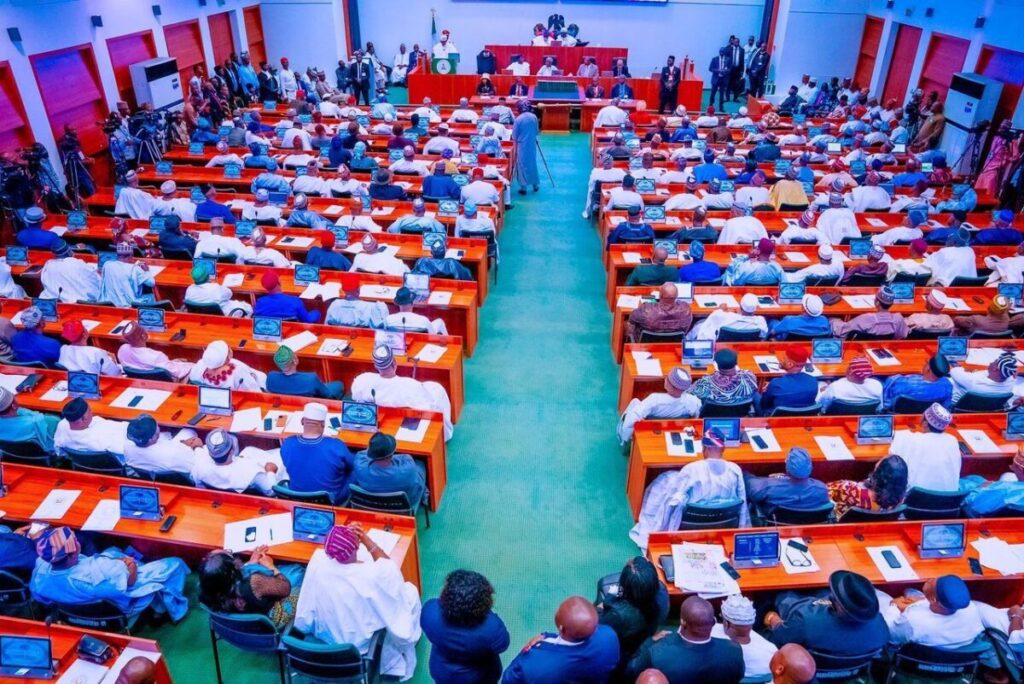
The Nigerian Senate will reconvene in an emergency plenary session today (Tuesday) as controversy continues to trail recent amendments to the Electoral Act, particularly provisions relating to the electronic transmission of election results.
The emergency sitting was announced in a notice issued on Sunday by the Clerk of the Senate, Mr Emmanuel Odo, following a directive from Senate President, Godswill Akpabio.
“I am directed by His Excellency, the President of the Senate, Distinguished Senator Godswill Obot Akpabio, GCON, to inform all Distinguished Senators of the Federal Republic of Nigeria that an Emergency Sitting of the Senate has been scheduled as follows: Date: Tuesday, 10th February, 2026. Time: 12:00 noon. Venue: Senate Chamber,” the notice read.
Although no official reason was provided for the emergency plenary, the development comes amid widespread public debate and protests following the Senate’s passage of the Electoral Act 2022 (Repeal and Re-enactment) Amendment Bill 2026 through a third reading last week.
The controversy centres on Clause 60, Subsection 3, of the bill, which addresses the electronic transmission of election results.
The Senate declined to approve a proposed amendment that would have made real-time electronic transmission of results mandatory, opting instead to retain the existing provision in the 2022 Electoral Act. The retained clause states that “the presiding officer shall transfer the results, including the total number of accredited voters and the results of the ballot, in a manner as prescribed by the Commission.”
The rejected amendment would have required presiding officers of the Independent National Electoral Commission (INEC) to electronically transmit polling unit results to the IREV portal in real time after the relevant result forms had been duly signed and stamped.
The Senate also rejected proposals seeking to impose a 10-year ban on vote-buyers, choosing instead to retain existing penalties of fines and imprisonment.
Public dissatisfaction over the Senate’s decision spilled onto the streets on Monday, as civil society organisations and opposition political parties staged a protest at the National Assembly complex in Abuja under the banner “Occupy National Assembly.”
The protest attracted a heavy security presence, with personnel deployed from the Nigeria Police Force, the Nigerian Army and the Nigeria Security and Civil Defence Corps.
Access to the National Assembly was barricaded, although protesters maintained that the demonstration was peaceful and restricted to the entrance gate.
The protesters marched from the Federal Secretariat to the National Assembly complex.
Former presidential candidate of the Labour Party and current member of the African Democratic Congress (ADC), Mr Peter Obi, also joined the protest. Obi urged lawmakers to make real-time electronic transmission of election results mandatory, citing the technical failures recorded during the 2023 general elections.
According to him, mandatory real-time transmission would strengthen transparency and public confidence in the electoral process.
In response to public backlash, Senate President Godswill Akpabio clarified that the Senate did not reject electronic transmission of election results but merely retained the provision contained in the 2022 Electoral Act.
Speaking at a book launch over the weekend, Akpabio explained that the phrase “real time” was removed to avoid potential legal disputes arising from network or power failures.
“All we said during the discussion was that we should remove the word ‘real-time’ because if there is a network or grid failure, someone could go to court and argue that results ought to have been transmitted in real time,” he said.
Akpabio added that the decision was meant to allow INEC the flexibility to determine the most appropriate method of transmitting election results, taking into account technological and security challenges.
Former Senate President, Senator David Mark, weighed in on the issue, stating that the National Assembly should allow INEC to decide whether or not to transmit election results electronically.
Despite the criticism, some senators have defended the amendment bill, insisting that electronic transmission enjoyed overwhelming support in the Red Chamber.
The Senator representing Anambra Central, Victor Umeh, said more than 85 per cent of senators supported electronic transmission, noting that the only point of contention was the removal of the phrase “in real time.”
“It was only ‘real time’ that was expunged because of network issues. Transmission itself was never in dispute,” Umeh said.
He added that confusion arose during plenary when the word “transmission” was reportedly replaced with “transfer” without debate, a move he said contradicted agreements reached during the Senate’s executive session.





