Why Buhari Threatened to Sack Me Over Fuel Subsidy Removal – Ex-Petroleum Minister Kachikwu
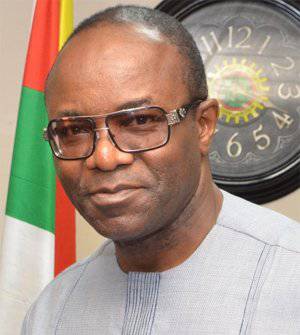
Former Minister of State for Petroleum Resources, Dr. Ibe Kachikwu, has revealed how ex-President Muhammadu Buhari threatened to sack him if his attempt to remove fuel subsidy during the last administration backfired.
Kachikwu, who served between 2016 and 2019, made the disclosure while speaking at a virtual business mentorship lecture series organised by the Nigerian Content Development and Monitoring Board (NCDMB) on Monday.
According to him, the persistent fuel queues that crippled economic activities in 2015 were his greatest challenge when he assumed office as Group Managing Director (GMD) of the Nigerian National Petroleum Company Limited (NNPCL).
“The greatest challenge I had when I resumed as GMD was the issue of long queues at petrol stations. Very few Nigerians realise how traumatic it was to wake up and see the entire country grounded,” Kachikwu said.
He recounted how much of the subsidised petrol was being smuggled across Nigeria’s borders despite efforts with security agencies.
Kachikwu said he approached Buhari several times to approve an upward review of pump prices, but the former president resisted due to his populist stance.
“I went to the President many times and said, ‘Look, I need to move up on price.’ He resisted very strongly. Eventually, he said, ‘Okay, I’ll leave you to take the risk. If it works, fine. If it doesn’t, I will fire you.’ That was all well and good for me. And I did,” he stated.
He explained that the introduction of a price modulation policy, which adjusted petrol prices to reflect international market realities, eliminated subsidy and cleared fuel queues nationwide within 48 hours.
“That singular adjustment removed the subsidy. Within 48 hours, every queue in the country disappeared. It never happened again until I left office. The government also began earning more money,” Kachikwu added.
The former minister also revealed that he refused to pay billions of naira in subsidy arrears inherited from previous administrations, insisting many claims were unverifiable.
On current policies, Kachikwu said subsidy removal under President Bola Tinubu was inevitable but criticised its execution.
“Subsidy removal was bound to happen, but there should have been clear plans for refineries, infrastructure, transport systems, and support for oil-producing communities. Without these, the burden weighs heavily on ordinary Nigerians,” he argued.
He stressed that Nigeria’s energy future requires tough decisions but said such policies must be complemented with strategies to safeguard citizens’ welfare.





