Volcano Eruption in Iceland Forces Evacuations
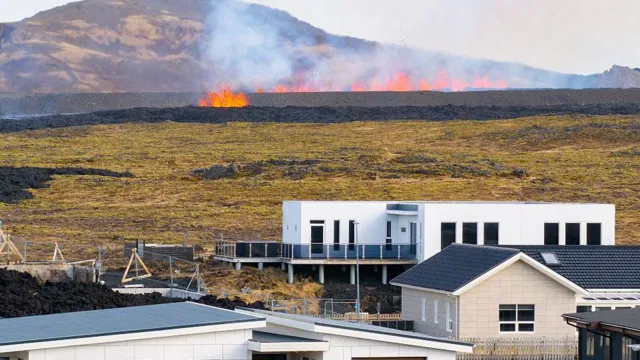
Tourists and residents have been evacuated as a volcano erupted in south-west Iceland, threatening a town and popular attraction.
The volcano has been spewing lava and smoke in a fiery display of orange and red since the eruption began in the morning, creating a huge crack in the ground that has grown to 1.2km (0.75 miles) long. Multiple earthquakes have occurred in the volcanic area throughout the day.
The volcano is close to the fishing town of Grindavík and the famous Blue Lagoon spa. A small number of people refused to evacuate the town, according to local media reports.
People were asked to “leave the danger zone,” the region’s police commissioner, Ulfar Ludviksson, told Iceland’s RUV broadcaster. However, he noted that individuals staying in “seven or eight houses there… have decided to remain in the town.”
There were fears that the town was “in danger of having lava flows entering the inhabited area,” said Rikke Pedersen from the Nordic Volcanological Centre.
A hot water pipe has broken in the northern part of Grindavík, confirming that considerable cracking has occurred within the town, according to the Icelandic Meteorological Office (IMO). The protective barriers around Grindavik have also been breached as a new eruptive fissure opened a few hundred meters inside, the IMO reported. However, volcanic activity eased off in the early afternoon on Tuesday.
Roads in and out of the town remain closed, but flights are currently unaffected.

Most of the 4,000 residents of Grindavík left in a mass evacuation in 2023 due to the dangers of volcanic activity. The volcano has erupted several times since then.
The length of the magma that formed on Tuesday under the crater series stretched to about 11 km (6.8 miles) – the longest measurement since 11 November 2023, meteorologists said. The magma corridor extends about 3km further northeast than seen in previous eruptions.
Based on current wind direction, gas pollution from the eruption will travel northeast towards the capital area, the IMO added.
The eruption, which began around 09:45 local time (10:45 BST), occurred after several earthquakes hit the area known as the Sundhnúk crater range. Multiple eruptions have occurred on the Reykjanes Peninsula since 2021.
The last time the peninsula experienced a period of volcanic activity was 800 years ago – with eruptions continuing for decades.
Iceland has 33 active volcano systems and sits over what is known as the Mid-Atlantic Ridge, the boundary between two of the largest tectonic plates on the planet.





