US–Japanese Trio Win 2025 Nobel Prize in Medicine for Groundbreaking Immune System Research
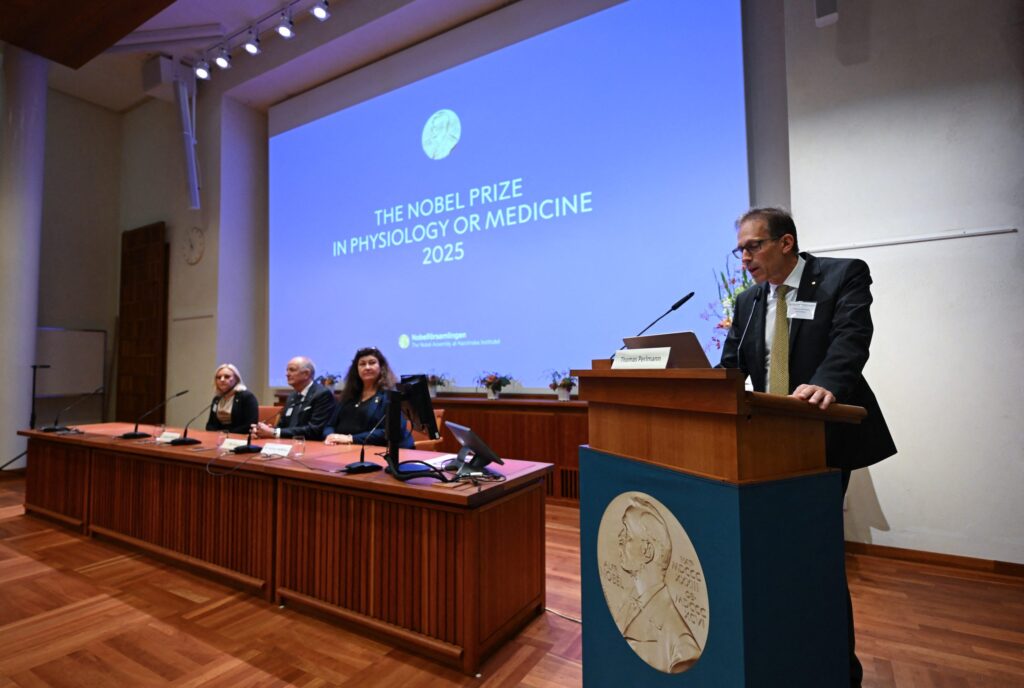
Mary E. Brunkow and Fred Ramsdell of the United States and Shimon Sakaguchi of Japan have been awarded the 2025 Nobel Prize in Physiology or Medicine for their pioneering research on how the immune system is regulated to prevent autoimmune diseases.
Announcing the award at the Karolinska Institute in Stockholm, the Nobel jury said the trio was honoured “for their discoveries concerning peripheral immune tolerance.” Their work has been instrumental in understanding how the body’s immune system maintains balance and avoids attacking its own tissues.
The discoveries laid the foundation for a new field of research, leading to advances in treatments for cancer and autoimmune diseases, and may also improve organ transplantation outcomes.
Sakaguchi, 74, made the first key discovery in 1995, identifying a previously unknown class of immune cells that protect the body from autoimmune reactions. Before this, many researchers believed immune tolerance occurred only through the elimination of harmful immune cells in the thymus.
Brunkow (born 1961) and Ramsdell (64) made their breakthrough in 2001, identifying a mutation in the Foxp3 gene in mice, which explained their susceptibility to autoimmune diseases. They also linked mutations in the human version of this gene to a severe autoimmune condition called IPEX. Sakaguchi later connected their findings to his earlier work.
The laureates will receive their Nobel medals, diplomas, and a $1.2 million prize from King Carl XVI Gustaf at the award ceremony in Stockholm on December 10, the anniversary of Alfred Nobel’s death.
Meanwhile, concerns have been raised about the future of US leadership in scientific research following major budget cuts to science programs under President Donald Trump’s administration. Nobel Committee Secretary General Thomas Perlmann warned that sustained cutbacks could have “very serious consequences” for global research.
The Nobel season continues this week with physics on Tuesday, chemistry on Wednesday, literature on Thursday, peace on Friday, and economics on Monday, October 13.