Trump Announces 90-Day Tariff Pause — China Tariffs to Rise Amid Escalating Tensions
In a surprising policy reversal, former President Donald Trump announced a 90-day pause on all newly implemented “reciprocal” tariffs—except for those targeting China. The move comes as Trump seeks to ease trade tensions with key allies while simultaneously escalating his trade battle with Beijing.
The pause, effective immediately, rolls back reciprocal tariff rates to a flat 10% for all affected countries, excluding China. “Based on the lack of respect that China has shown to the World’s Markets, I am hereby raising the Tariff charged to China by the United States of America to 125%,” Trump declared in a Truth Social post. The previous rate stood at 104%.
China Tariffs Surge, Allies Spared
Tariffs on Chinese imports will not only remain in place—they will increase. The hike follows China’s announcement of new retaliatory tariffs of up to 84% on U.S. goods, escalating trade tensions between the world’s two largest economies.
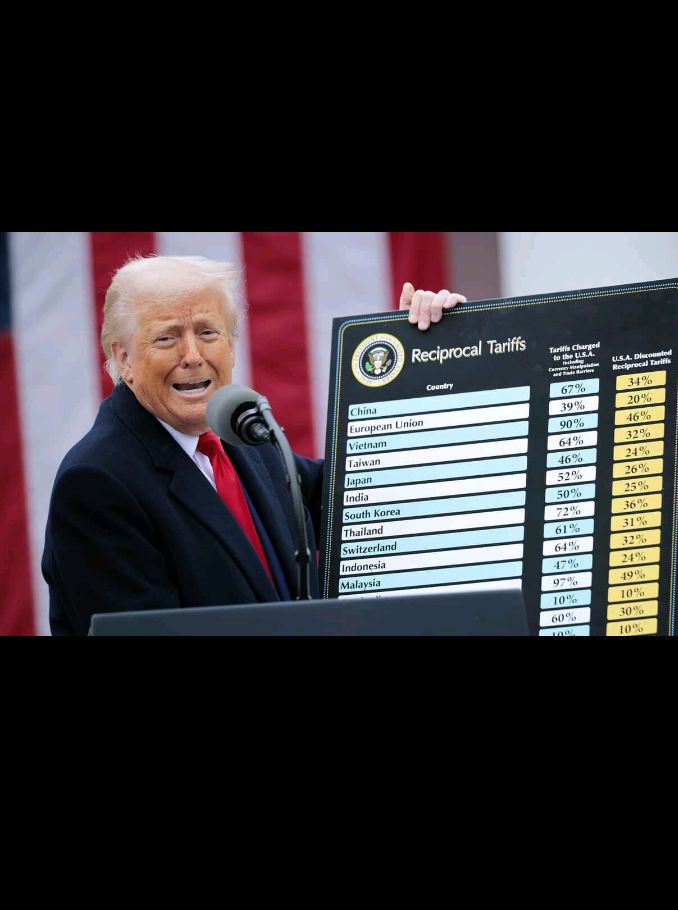
Mexico and Canada are largely exempt from the 10% universal rate, though many of their exports will continue to be subject to existing 25% tariffs unless they comply with the US-Mexico-Canada Agreement. Sector-specific tariffs, such as those on steel, aluminum, and automobiles, remain unaffected by the pause.
Wall Street Rebounds on Tariff Relief
The financial markets responded positively to Trump’s announcement. The Dow Jones Industrial Average jumped over 2,700 points (7.3%), while the S&P 500 rose 9.2% and the Nasdaq soared nearly 12%. Just hours earlier, Trump had encouraged investors with an all-caps post: “THIS IS A GREAT TIME TO BUY!!!” His post ended with “DJT,” referencing Trump Media & Technology Group Corp., whose shares surged over 20% Wednesday after a rough month.
Trump Shifts Tone: ‘You Have to Have Flexibility’
Speaking to reporters, Trump struck a more conciliatory tone than in previous trade remarks. “Nothing’s over yet, but we have a tremendous amount of spirit from other countries, including China. China wants to make a deal—they just don’t know how quite to go about it,” he said.
The 90-day pause, according to Treasury Secretary Scott Bessent, was “always part of his strategy.” Bessent emphasized Trump’s involvement in tariff discussions and claimed the move sends a message: “Do not retaliate and you will be rewarded.”
Bessent and Commerce Secretary Howard Lutnick were reportedly with Trump when he posted his announcement. “The world is ready to work with President Trump to fix global trade,” Lutnick posted on X, “and China has chosen the opposite direction.”
Mixed Messaging Inside the Administration
Not everyone in the Trump administration appeared to be on the same page. U.S. Trade Representative Jamieson Greer testified that he wasn’t aware of the pause until after it was announced. Although he admitted the possibility had been discussed, he denied knowing the decision had been finalized.
Greer’s comments highlighted the often-opaque nature of Trump-era policy shifts, where even senior officials are sometimes kept in the dark until public announcements are made.
China Vows to Fight On
Beijing quickly responded with fierce criticism. The State Council Tariff Commission accused the U.S. of “mistake upon mistake,” claiming that Washington’s escalation “seriously damages the multilateral trading system based on rules.”
Cornell University economist Wendong Zhang noted that China’s strategy has shifted since the 2018–2019 trade war, with the country reducing reliance on U.S. goods and pivoting toward domestic consumption. “Chinese leaders have the backing of a more supportive general public to stand up to the U.S.,” Zhang said.
Recession Fears Linger
Despite the temporary tariff relief, economists warned that the broader U.S. economy remains vulnerable. Joe Brusuelas, chief economist at RSM US, said the pause may only delay an impending recession: “All this does is postpone temporarily what will likely be a series of punitive import taxes.”
Goldman Sachs adjusted its forecast following the announcement, revising the likelihood of a recession over the next 12 months to 45%, down from a previous assumption that a downturn was the base case.
Business Groups Cautiously Optimistic
Jake Colvin, president of the National Foreign Trade Council, called the pause “a step in the right direction,” but emphasized that major concerns remain. “Let’s not celebrate the fact that it still seems to leave in place a new baseline of 10% tariffs on most countries, plus significant levies on China, steel and aluminum and autos, with the promise of more duties to come.”
Trump has also signaled potential tariffs on additional sectors, including lumber, pharmaceuticals, and copper.
Outlook Uncertain
While the pause provides short-term relief to businesses and investors, uncertainty looms. The administration offered few details on what happens after the 90-day window expires. Talks with countries like Vietnam are already underway, but the longer-term strategy remains unclear.
For now, the message from Trump is simple: hold fire, or face the consequences.




