Sowore Slams Tinubu’s Student Loan Policy as “Primitive” Amid Rising Unemployment
By Titilope Johnson
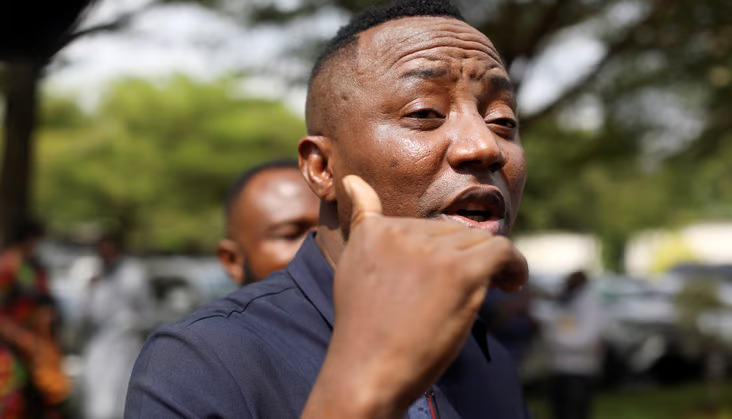
Human rights activist Omoyele Sowore has strongly criticised President Bola Tinubu’s student loan policy, calling it “an antiquated idea” unsuitable for a country struggling with soaring unemployment and worsening poverty.
In an interview with Channels Television on Tuesday, Sowore painted a grim picture of Nigeria’s socio-economic situation two years into the Tinubu administration.
He said, “We are being compared with Sudan in terms of the likelihood of a child not living past five years. We have pushed millions into multidimensional poverty — from less than 7 million in 1970 to over 170 million today. The minimum wage today is worse than it was in 1975. Where is the promised hope?”
Sowore also criticised the student loan scheme, arguing it burdens young Nigerians unlikely to find jobs after graduation. Reflecting on his own student experience, he said, “I paid N19 for accommodation and N45 for school fees at the University of Lagos. How can I applaud a loan scheme that puts students in debt? Even in the US, where I took loans, it was the worst decision — causing depression and suicides.”
He condemned the policy as outdated, adding, “It’s primitive to give loans to students who can’t find jobs while subsidising the idle elite.”
Meanwhile, the Independent Corrupt Practices and Other Related Offences Commission (ICPC) has launched an investigation into alleged discrepancies in the disbursement of student loans under the Nigeria Education Loan Fund (NELFUND).
Reports implicated at least 51 tertiary institutions in illegal deductions from student fees funded by NELFUND. Although the government reportedly released N100 billion, only N28.8 billion reached students, leaving N71.2 billion unaccounted for.
The ICPC confirmed it had sent investigation letters to key agencies and NELFUND officials. As of March 2024, NELFUND had received over N203 billion from multiple sources, disbursing approximately N44.2 billion to 299 institutions and benefiting nearly 293,000 students.
The commission stated no clear case of discrepancies had been established but that the probe would continue, extending to beneficiary institutions and individual students.