Shehu Sani’s Call for Broader Accountability Sparks Mixed Reactions
By: Titilope Johnson
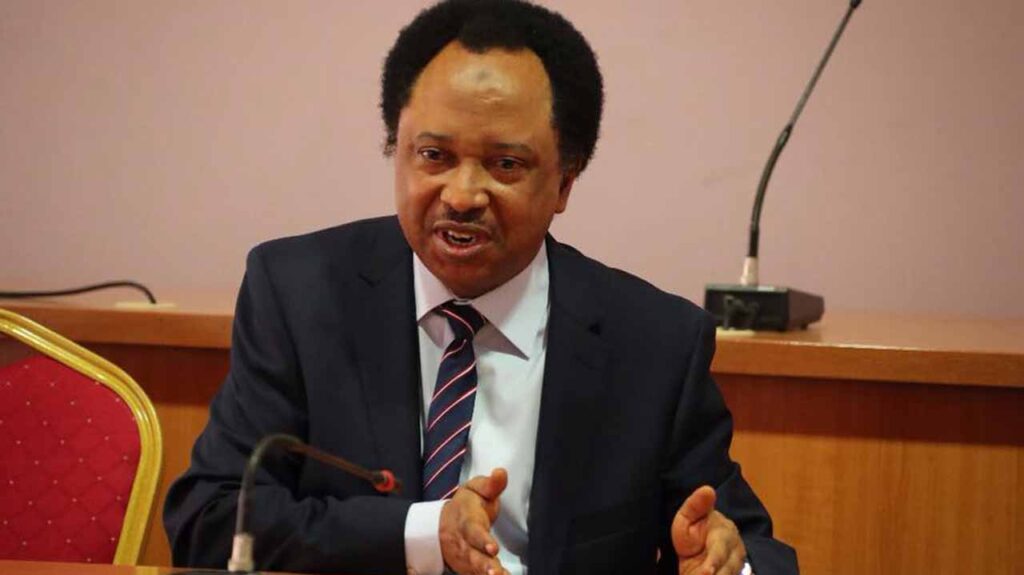
A recent comment by former Senator Shehu Sani, urging Nigerians to assess the performance of their state governors and National Assembly representatives—not just President Bola Tinubu—has triggered a wave of mixed reactions across the country.
Sani, who represented Kaduna Central Senatorial District from 2015 to 2019, made the statement on his verified X handle (formerly Twitter) to mark the second anniversary of President Tinubu’s administration.
“I have read a lot of positive and negative comments about the two years of President Tinubu. Please, be courageous enough to also write about the governor of your state, the senator and members of the House of Representatives and state House of Assembly members representing you,” he posted.
“I know that some of them have online bullies and thugs who know your addresses, but just be bold to express your opinion. That’s your right.”
A Divided Public Reaction
While many praised Sani—a longtime human rights activist—for promoting balanced political accountability, others saw his message as an attempt to deflect criticism from the Federal Government’s perceived shortcomings.
Critics argued that as Commander-in-Chief and leader of the executive arm, the President ultimately bears the greatest responsibility for national policy, economy, and security. Therefore, they believe, criticism of the Federal Government is both justified and necessary.
However, a sizable number of Nigerians backed Sani’s view, noting that governors, senators, and House of Assembly members also control significant public resources and wield power that must not escape scrutiny.
Calls for Shared Accountability
Former presidential aide, Dr. Awosan Olusanya, echoed Sani’s stance, stressing the need to hold all elected officials accountable, not just those at the federal level.
He argued that President Tinubu inherited a distressed economy from his predecessor, but his biggest failure has been poor communication—failing to effectively explain the depth of the economic and structural issues he encountered upon assuming office.
Anambra Among Top Performers in 2025 E-Governance Index
Meanwhile, Anambra State has been named one of Nigeria’s top three states in the newly released 2025 E-Governance Report, published by Panorama and the Commonwealth Institute of Advanced Professional Studies (CIAPS) Governance Performance Index.
Anambra joined Lagos and Enugu as leaders in e-governance adoption, excelling in areas such as:
- Website security
- Public engagement
- Online service availability
- Up-to-date content and policy communication
- User accessibility
Speaking on the report, Prof. Anthony Kila, Director of CIAPS, highlighted the growing significance of e-governance in shaping effective, transparent, and citizen-focused governance.
“E-governance is no longer optional. It is essential for improving public trust, efficiency, and service delivery in a digital age,” Kila noted.
Conclusion
Shehu Sani’s comments have reignited debate on how Nigerians apportion political responsibility. While some argue that national leadership deserves the spotlight, others insist that meaningful change requires holding all levels of government accountable.






https://shorturl.fm/FIJkD
https://shorturl.fm/68Y8V
https://shorturl.fm/9fnIC
https://shorturl.fm/hevfE
https://shorturl.fm/IPXDm