Senate Secrecy Stalls Electoral Reforms as Group Warns of Threat to Democracy
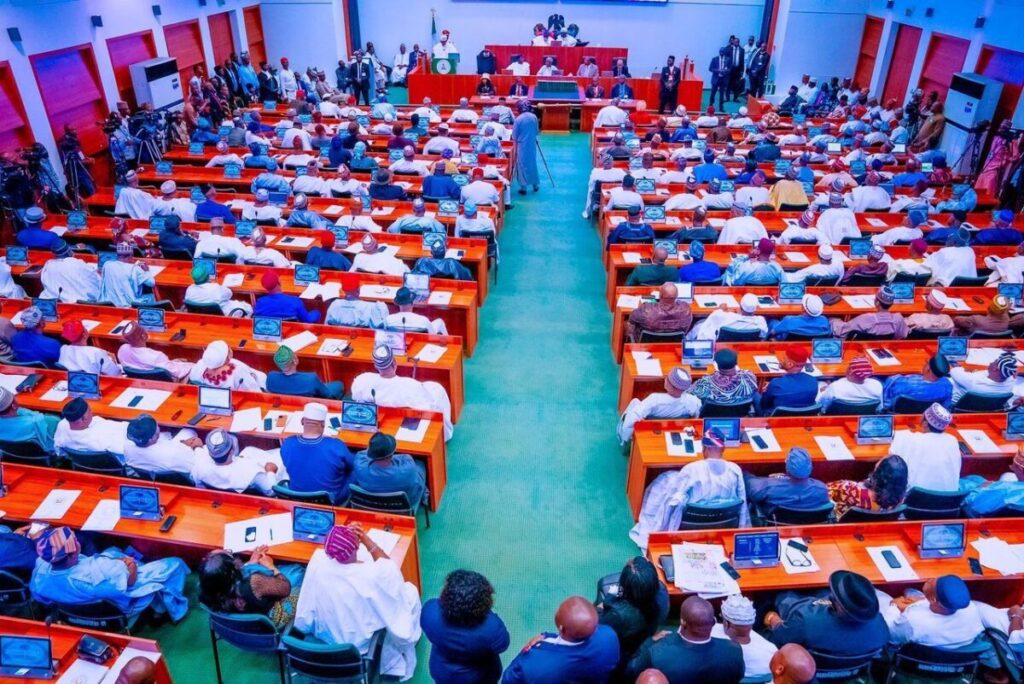
Nigeria’s push for electoral reform suffered another setback on Tuesday as the Senate concluded a four-hour closed session on the Electoral Act Amendment Bill without disclosing any decision, raising concerns that key transparency measures are being delayed as the country moves closer to future elections.
Lawmakers entered executive session at about 1:06 p.m. after Senate Leader Opeyemi Bamidele moved a motion to resume the deferred clause-by-clause consideration of the report of the Senate Committee on Electoral Matters, chaired by Senator Simon Lalong. The closed-door deliberations lasted over four hours, with plenary resuming around 5:30 p.m.
However, no clarity emerged on the fate of the bill.
Addressing the chamber, Senate President Godswill Akpabio said senators had deliberated on issues “concerning the Senate in particular and the nation in general,” before asking members to affirm that the outcome reflected the work of the Committee of the Whole. The chamber agreed, and the matter was concluded without any public disclosure.
Shortly after, Bamidele moved a motion to adjourn plenary until today, which was adopted.
This marks the second time the Senate has ended deliberations on the Electoral Act Amendment Bill without revealing its position, despite heightened public interest in the proposed reforms.
The bill seeks to strengthen Nigeria’s electoral process through measures such as mandatory real-time electronic transmission of results from polling units to the Independent National Electoral Commission (INEC) Result Viewing Portal (IREV), stiffer penalties for electoral offences including ballot box snatching and result falsification, and enhanced accountability for electoral officers.
Other proposals include replacing references to the “smart card reader” with the Bimodal Voter Accreditation System (BVAS), barring party agents or candidates from accompanying visually impaired or incapacitated voters into voting cubicles, and increasing fines for buying or selling Permanent Voter Cards from ₦500,000 to ₦5 million.
The Senate’s continued silence has left observers questioning when the amendment process will be concluded as political actors prepare for future polls.
Group Warns of Democratic Erosion
Meanwhile, the National Conscience Platform (NCP) has warned that prolonged delays in electoral reform pose a serious threat to Nigeria’s democracy, saying public trust in the electoral process is rapidly eroding.
In a statement jointly signed by its interim coordinators, Comrade Babatunde Agunbiade and Wale Ogunade, the group said declining voter turnout and stalled Electoral Act amendments reflect a “systemic failure that can no longer be addressed with cosmetic fixes.”
Citing INEC data, the NCP noted that voter turnout dropped from about 54 per cent in 2011 to 35 per cent in 2019, and further to approximately 27 per cent in the 2023 general elections, describing the trend as “public resignation rather than apathy.”
“When citizens withdraw from elections, democracy does not merely weaken; it begins to lose legitimacy,” the statement said.
The group expressed concern that despite Nigeria running one of the most expensive electoral systems in Africa, public confidence continues to decline.
“Credibility cannot be purchased. It is built through strong institutions, fair competition and enforceable rules,” the platform stated.
The NCP warned that failure to amend the Electoral Act sustains structural weaknesses that weaken opposition politics, entrench exclusion and undermine accountability. It also cautioned against a drift toward one-party dominance, stressing that political pluralism is essential for democratic stability.
“Electoral reform delayed is democracy denied,” the group concluded, urging civil society, labour unions, faith leaders, youth groups and the media to push collectively for comprehensive reform.
Karimi Calls for Revenue Formula Review
In a related development, Senator Sunday Steve Karimi (Kogi West) has renewed calls for a review of Nigeria’s revenue allocation formula, citing weak accountability at the state level and increasing financial strain on the federal government.
Speaking during consideration of the Constitution of the Federal Republic of Nigeria (Alteration) Bill 2026 (SB 1016), Karimi argued that states now receive larger allocations without corresponding oversight, while the federal government struggles with infrastructure decay, insecurity and mounting constitutional responsibilities.
“Once funds are shared from the Federation Account, constitutional limitations make it difficult to track how states spend the money,” he said, questioning the effectiveness of state Houses of Assembly in holding governors accountable.
Karimi noted that while the federal government is subjected to constant scrutiny, state governments often operate with little accountability. He linked this imbalance to deteriorating federal roads, unpaid contractors and underfunded security operations.
According to him, the federal government lacks adequate resources to meet national obligations, including defence and counterterrorism, forcing it to explore unconventional funding options.
His proposed bill seeks a modest increase in the federal government’s share of revenue, arguing that national responsibilities have expanded significantly since the current formula was adopted.
“This is not about politics or centralising power,” Karimi said. “It is about ensuring the federal government can meet its constitutional responsibilities to Nigerians.”
The bill has passed first reading and is expected to attract intense debate as lawmakers weigh issues of revenue sharing, accountability and fiscal federalism.
By John Akubo and Bertram Nwannekanma





