Senate Clarifies: Real-Time Results Transmission Not Equivalent to E-Voting
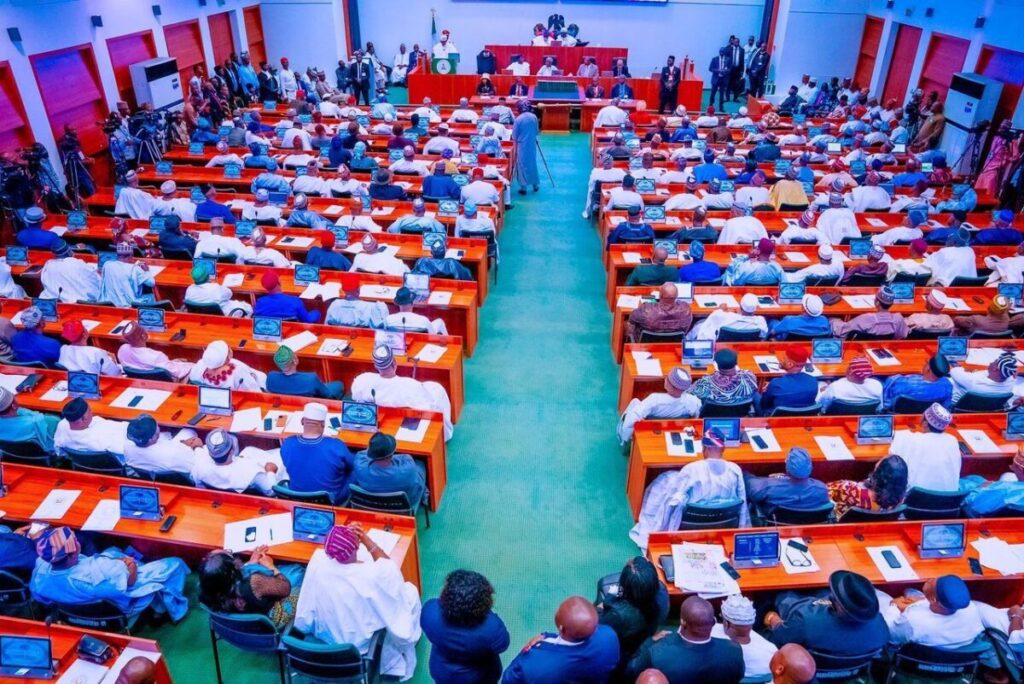
The Senate has clarified that real-time electronic transmission of election results does not amount to electronic voting (e-voting), stressing that the Independent National Electoral Commission (INEC) currently lacks the capacity to conduct e-voting in Nigeria.
Lawmakers also faulted claims that the Senate rejected the use of the INEC Result Viewing Portal (IReV) for the 2027 general elections, insisting that the portal remains part of the electoral process as a results publication platform.
Chairman of the Senate Ad-hoc Panel to Review the 2026 Electoral Bill, Adeniyi Adegbonmire, made the clarification during an interview on Arise News Channel yesterday.
He explained that Nigeria has not transitioned to e-voting and that real-time transmission should not be confused with electronic voting.
“People need to understand what real-time means. Real-time transmission can only happen if INEC adopts an e-voting system. For now, INEC does not have the capability for e-voting,” he said, adding that such a system could only be feasible in the future.
Adegbonmire stressed that the IReV is not a voting or collation platform but a system designed to publicise results that have already been manually counted and declared at polling units.
According to him, results are first recorded manually on Form EC8A by the presiding officer, signed and countersigned by party agents, before being uploaded to the IReV portal.
“Whether we call it upload, transfer or transmission, it does not change the process. Voting and counting are manual. It is not IReV or BVAS that counts ballots,” he said.
He cautioned that misrepresentation of the role of IReV could have serious implications for public understanding and peaceful coexistence, noting that the National Assembly cannot alter INEC’s software configuration through legislation alone.
Senate, Reps Differ on ‘Real-Time’ Clause
Also speaking on the issue, Chairman of the House of Representatives Committee on Electoral Matters, Adebayo Balogun, said the only difference between the versions of the Electoral Bill passed by the Senate and the House of Representatives is the inclusion of the “real-time” clause.
Balogun, who appeared on Arise Television’s Morning Show, stated that neither chamber endorsed the use of IReV for election results collation.
“It is still Form EC8A that will be used at the collation centre. Electronic transmission was agreed to by both chambers, but IReV is not the basis for collation,” he said.
He added that the discrepancies between the two versions would be harmonised by a joint committee representing all parties.
PFN Warns Against Early 2027 Politicking
Meanwhile, the Pentecostal Fellowship of Nigeria (PFN) warned political actors against premature politicking ahead of the 2027 elections, urging leaders to focus on governance, insecurity and economic hardship.
Speaking in Lagos, PFN President Wale Oke said attention had shifted from governance to electioneering despite the fact that INEC had not officially declared the commencement of campaigns.
“For goodness’ sake, let’s govern. Let INEC blow the whistle before campaigns begin,” he said.
While supporting real-time electronic transmission of results, PFN stressed the need for credible elections conducted on a level playing field. The fellowship also rejected the use of church pulpits for political campaigns and reiterated its non-partisan stance.
Beyond electoral matters, PFN called for urgent action to address insecurity, hunger and infrastructure deficits, and urged the Federal Government to ensure that democracy delivers tangible benefits to Nigerians.





