Raw Material Shortages, Insecurity Threaten Nigeria’s Industrial Revival Under ‘Nigeria First’ Policy
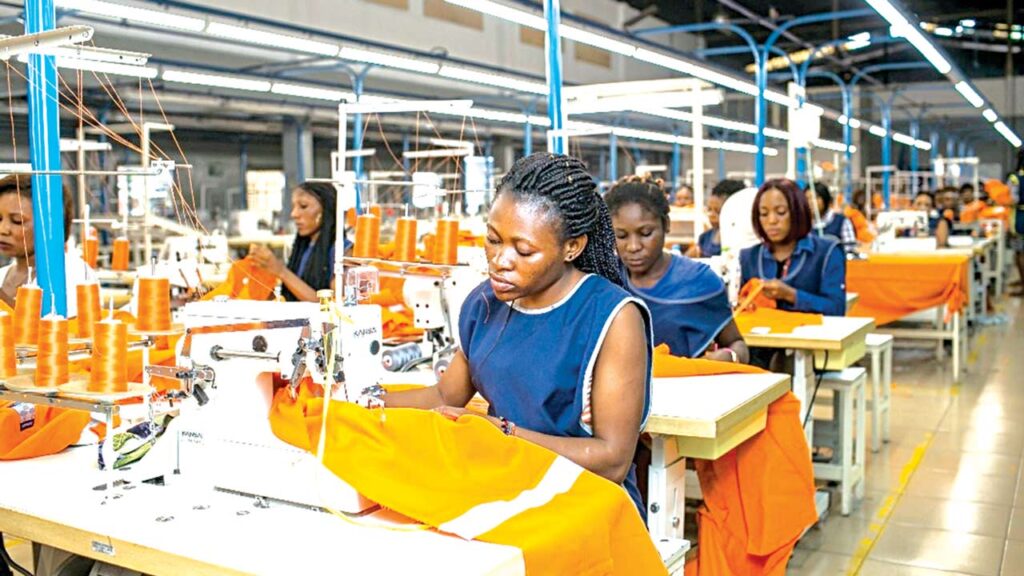
A renewed push for Nigeria’s industrial revival, anchored on President Bola Tinubu’s Nigeria First Policy, is facing significant hurdles as insecurity and weak infrastructure threaten to erode modest gains in the country’s backward integration programme (BIP).
Manufacturers Retreat from Backward Integration
Many major manufacturers have either scaled down or suspended backward integration projects, citing fiscal pressures, insecurity, and logistics bottlenecks. The flagship Nigeria Sugar Master Plan (NSMP) — first launched in 2012 — is now under review. Despite new deals to boost production to meet the 1.7 million metric tonnes national demand, progress is hampered by insecurity and a $4.5 billion investment gap.
Two months after the unveiling of the Nigeria First Policy, industries still rely heavily on imported raw materials, undermining the protectionist intent of the policy. According to the Raw Materials Research and Development Council (RMRDC), 70% of manufacturing inputs are still imported.
The Manufacturers Association of Nigeria (MAN) has warned that raw material imports surged by 119% to N4.53 trillion in the first nine months of last year. A new amendment to the RMRDC Act (2025) — mandating at least 30% processing or value-addition before raw materials are exported — is designed to address this, but experts stress that enforcement capacity remains uncertain.
Copper, Plastics, and Agro-Allied Sectors Struggle
George Onafowakan, CEO of Coleman Wires and Cables Ltd, noted that insecurity in Zamfara, Nassarawa, and Yobe states has hindered copper mining despite the country’s deposits. Nigeria spent $25.24 million importing copper in 2024, while processing copper locally could save $70–120 million monthly.
In the plastics sub-sector, operators lament that despite Nigeria’s petrochemical resources, reliance on imports persists. Former MAN chair Frank Onyebu noted that imported virgin plastics are sometimes cheaper than local supply, pushing manufacturers to depend on recycled plastics — now making up 70% of industry input.
The agro-allied sector is not spared. Ibrahim Husseini, COO of Creativo El-Matador Ltd, revealed that cashew farmers in Kogi, Kwara, Edo, and Oyo states have become frequent kidnapping targets, forcing many to abandon their farms. Although 95% of cashew raw materials are sourced locally, insecurity has disrupted supply chains and driven up costs.
Nigeria is the fourth-largest cashew producer globally, yet processes just 15% of its harvest. Exporting raw cashews — at about N2 million per metric tonne — yields only a fraction of the value compared to processed cashews, which fetch N12 million per metric tonne.
Industry leaders agree that insecurity remains the biggest obstacle to local sourcing, with over 30% of farmers abandoning their farms due to safety concerns. This has increased raw material costs and undermined Nigeria’s industrialisation goals.
While the Nigeria First Policy and new legislation hold promise, their success will depend on deliberate government action to secure farmlands, incentivise local sourcing, and enforce processing requirements. Without this, Nigeria risks repeating the failures of past policies like the Buy Nigeria Policy and Executive Orders 003 and 005.