Nigeria at the Brink: Youth at Risk from Drug Abuse and Mental Health Crisis
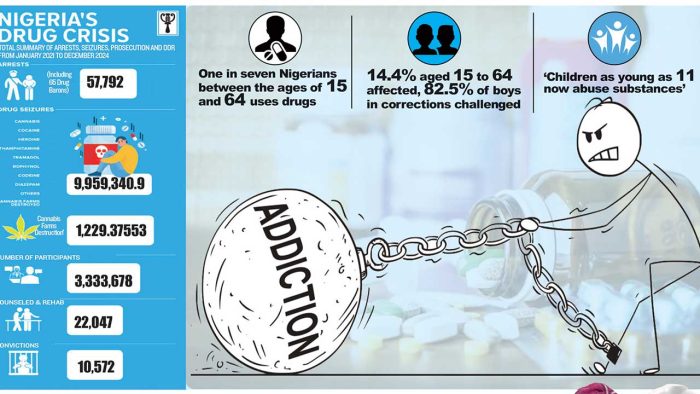
Nigeria is facing a growing and deeply troubling crisis, with drug abuse and mental health disorders threatening to derail the future of its youth. A United Nations report has revealed that 14.4 per cent of Nigerians aged 15 to 64 abuse drugs—nearly three times the global average. Even more concerning, one in five of these users suffer from disorders requiring urgent intervention.
A study at a Borstal Institution in North-Central Nigeria found that 82.5 per cent of adolescent boys had psychiatric disorders, with the most common being disruptive behaviour disorders (40.8%), substance use disorders (15.8%), and anxiety disorders (14.2%).
Mental Health Crisis Among Boys
Professor Olurotimi Coker of LASUTH warns that boys in Nigeria are increasingly grappling with mental health challenges, such as anxiety, depression, and substance abuse. Societal expectations that boys remain “strong” often prevent them from seeking help, leading to silent suffering.
At the 2025 Lagos Boy Child Initiative (LBCI), Coker stressed the importance of early intervention and supportive environments for boys struggling with mental illness. He emphasized that seeking help is not a sign of weakness.
The World Health Organization (WHO) estimates that one in every four Nigerians—around 50 million people—suffers from a mental health condition. Alarmingly, suicide ranks among the leading causes of death for those aged 15 to 29 globally.
Drug Trafficking and Violent Extremism
A 2025 study by scholars at Chukwuemeka Odumegwu Ojukwu University highlights the link between drug abuse and insecurity. Criminal networks and insurgent groups, particularly Boko Haram and ISWAP, benefit from the illicit drug trade, using it to finance operations and recruit members.
The Nextier Group’s report confirms that drugs like tramadol, cannabis, heroin, and cocaine are smuggled through porous borders, with weak institutions and corruption enabling the trade. Extremist groups use proceeds from drug sales to buy weapons and embolden fighters, deepening instability in the Lake Chad Basin region.
Impact on Rural Communities
Poor, rural areas are especially vulnerable. The promise of money and social status lures young people into criminal networks, perpetuating a cycle of poverty, addiction, and violence. Local economies and agriculture suffer as a result.
Government and Regional Response
While ECOWAS and the African Union have made efforts, challenges such as underfunding and corruption persist. The Nextier Group recommends improved border security, community policing, education, and economic empowerment as part of a multi-pronged strategy.
NDLEA’s Role and Achievements
Brig. Gen. Mohamed Marwa (rtd.), Chairman of the National Drug Law Enforcement Agency (NDLEA), emphasizes the devastating impact of drug abuse. With one in seven Nigerians aged 15–64 using drugs, this issue strikes at the heart of the country’s most productive age group.
NDLEA has arrested nearly 58,000 suspected traffickers and secured over 10,000 convictions in three years. It has also rehabilitated 22,047 addicts and seized nearly 10 million kg of illicit drugs.
In 2024 alone:
- 17,670 arrests
- 3,427 convictions
- 2.7 million kg of drugs seized
NDLEA’s War Against Drug Abuse (WADA) initiative has reached over 3.3 million participants in schools across the country.
Despite progress, the drug epidemic persists. The 2025 NDLEA budget includes N67.5 billion, yet Marwa insists more capital is needed—particularly for securing accommodation and expanding operations at the grassroots level.
Drugs on the Streets
Illicit drugs are widely accessible, with many costing less than a soft drink. Street names like Molly, Ice, Skushies, and Loud mask the dangers of substances such as diazepam, Rohypnol, heroin, methamphetamine, and codeine.
Calls for Collective Action
Civil society groups like Constitutional Watch and Rescue Nigeria stress that drug abuse cannot be solved by government alone. Families, schools, religious organisations, and community leaders must work together to educate and protect youth.
Mental health professionals, including Dr Charles Umeh and Dr Gbenga Shadare, joined David Folaranmi, a former addict turned advocate, in calling for urgent and united action. Folaranmi warned that even children as young as 11 are falling into substance abuse.