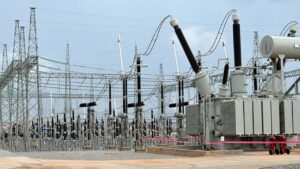
National Grid Risks N5.6tr Revenue Loss As Premium Customers Exit

Nigeria’s power sector is sliding into a deeper financial crisis, with government liabilities projected to hit N6.2 trillion by the end of 2025, following the mass exit of premium customers from the national grid.
Already weighed down by a N4 trillion legacy debt to generation companies (GenCos), the Federal Government has accumulated N1.6 trillion in fresh arrears as of August 2025, expected to climb to N2.2 trillion by December. Current liabilities stand at N5.6 trillion.
According to the Nigerian Electricity Regulatory Commission (NERC), only 13% of commercial customers still rely on the grid—down from 20%—as industries and premium households migrate to solar and self-generation. Manufacturers alone spent a record N1 trillion on self-generation in 2024, while NERC licensed 46 bulk consumers and off-grid operators, adding 289MW capacity outside the grid.
In 2025, states including Jigawa, Zamfara, Lagos, Delta, and Katsina have signed renewable energy deals, while the Federal Government is considering pulling its own agencies off the grid. This threatens a monthly N200 billion tariff shortfall, worsened by government’s inability to adjust electricity tariffs as earlier promised.
Investigations reveal that enforcing NERC’s new Free Governor Control (FGC) order to stabilise the grid may add N1.059 trillion in yearly liabilities. Without fresh funds, compliance remains unlikely.
Operators warn that Nigeria’s fragile electricity network is more of a financial than technical issue. GenCos disable FGC because they are not compensated for available capacity—unlike Azura Power, which receives payments for installed capacity.
Despite public assurances, Finance Minister Wale Edun has not provided a clear timeline for settling debts. Government’s proposed promissory notes face limits, as the Debt Management Office (DMO) earmarked only N800 billion for 2025, covering all federal creditors, while just N900 billion was budgeted for electricity subsidies against a N2 trillion annual subsidy burden.
Meanwhile, GenCos—owed about N270 billion monthly, with only 27% actually paid—demand inclusion in designing repayment frameworks to ensure invoice reconciliation, transparency reviews, and settlement of legitimate debts.
Industry stakeholders warn of worsening liquidity and capacity crises as industrial users abandon the grid, leaving mostly households and small businesses behind. The Nigerian System Operator (NISO) insists FGC is compulsory, crucial for Nigeria’s planned integration into the West African Power Pool (WAPP).
But GenCos argue that without spinning reserves, proper compensation, and timely receivable payments, plants will continue operating below capacity, raising costs, straining assets, and risking frequent grid instability.