N70,000 Minimum Wage: Why Lagos Street Sweepers Deserve More Than Empty Promises
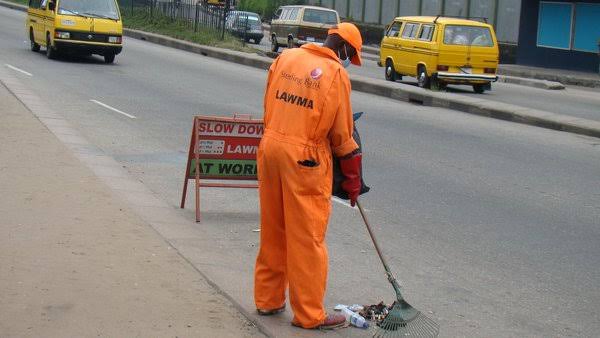
Despite Lagos’ swift adoption of the new wage law, street sweepers—arguably among the city’s most vital yet vulnerable workers—remain excluded from its benefits, raising legal and ethical concerns.
By: Titilope Johnson
Lagos State was among the first in Nigeria to implement the new ₦70,000 national minimum wage, but its failure to extend this to street sweepers, many of whom earn less than ₦40,000 monthly, has sparked outrage and calls for justice.
Street sweepers under the Lagos State Waste Management Authority (LAWMA) have long endured harsh conditions, but a viral video protest by one of them has drawn widespread attention to their plight. The unidentified woman alleged that despite a supposed salary increase to ₦85,000 since August 2024, many sweepers still receive only ₦30,000 monthly, often paid late and without benefits.
“We work in dangerous conditions—people have died from trailer horns and dust. We just want justice,” she said.
Legal and Labour Fallout
Following the 2024 National Minimum Wage Amendment Act, Senate President Godswill Akpabio clarified that all employees, including casual and domestic workers, are entitled to the ₦70,000 wage. The Ministry of Labour and Employment further stated that paying less constitutes a criminal offense.
Despite this, Lagos sweepers—many of whom work under private contractors—have not seen the wage increase. The state government insists these workers are not direct employees and therefore not eligible under public sector provisions.
But labour leaders and legal experts disagree.
Government’s Defense
LAWMA Managing Director Dr. Muyiwa Gbadegesin defended the system, claiming that sweepers are paid via structured contracts and benefit from healthcare, welfare schemes, and wage reviews.
Commissioner for the Environment Tokunbo Wahab added that sweepers only work four hours daily and thus do not qualify for full minimum wage, a claim labour unions have challenged as arbitrary and exploitative.
NLC and TUC Push Back
Funmi Sessi, Chair of the Nigerian Labour Congress (NLC), Lagos Chapter, rejected the government’s defense, saying:
“This part-time narrative is flawed. The minimum wage is about employer obligation, not hours worked. These people are workers by every definition and deserve protection.”
Sessi confirmed that the NLC and TUC have jointly petitioned the government and met with officials to demand reform. According to her, the current pay structure—administered through contractors—leads to salary discrepancies, irregularities, and alleged exploitation.
Legal Experts: Lagos is Liable
Human rights lawyer Malachy Ugwummadu dismissed the argument that sweepers are not entitled to minimum wage due to their work hours. He argued that:
“The Minimum Wage Act covers all employees. Their exclusion is unlawful and immoral, especially given the dangers they face daily.”
Ugwummadu added that labour laws criminalise attempts to evade wage obligations, and highlighted the International Labour Organisation (ILO)’s position that non-standard workers—including part-time, contract, and informal workers—must be included in wage protections.
Aderonke Alex-Adedipe, a legal expert at Pavestones Legal, also noted that the Labour Act covers manual labourers, and that only workers earning by commission or piece rate are exempt from the Act.
The Human Cost
While Lagos positions itself as a model megacity, the realities faced by street sweepers paint a different picture. From accidents and health hazards to late payments and insufficient tools, the indignities faced by these workers highlight deep systemic failings.
Conclusion
If Lagos State can pay civil servants ₦70,000 and brand itself as a leader in urban governance, then what’s sauce for the goose should be sauce for the gander. The city’s unsung heroes—its street sweepers—deserve not just applause, but fair pay, legal protection, and human dignity.





