Makinde Faults Umahi’s Response To Questions On Lagos-Calabar Coastal Highway Cost
By Titilope Johnson
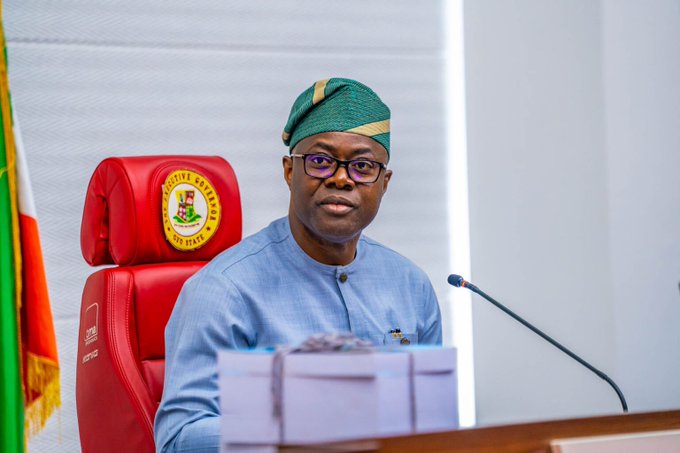
Oyo State Governor Seyi Makinde has criticised Minister of Works David Umahi over his response to questions regarding the cost of the Lagos-Calabar Coastal Highway project approved by President Bola Tinubu.
Makinde’s comments followed a heated exchange between Umahi and Arise TV presenter Rufai Oseni during a live interview on Tuesday.
Oseni had asked the minister to provide a kilometre-by-kilometre breakdown of the highway’s cost, a question Umahi dismissed as “elementary.”
“These are elementary questions. And it makes no sense… How can you be asking for cost of kilometre? The prices are different. The next kilometre is different from the next kilometre,” Umahi said during the interview, adding, “Keep quiet and stop saying what you don’t know. I’m a professor in this field.”
Oseni stood his ground, replying, “Minister, it’s alright, keep dignifying yourself, and let the world know who you truly are.”
In a viral video of his Friday remarks, Makinde backed the journalist’s line of questioning, stating:
“They asked a minister how much the coastal road is, and then you (Umahi) are dancing around and saying that the next kilometre is different from the next. Then what is the average cost? When we did the Oyo to Iseyin road, it was about ₦9.99 billion for about 34–35 kilometres, averaging ₦238 million per kilometre. For Iseyin to Ogbomoso — 76 kilometres — it was about ₦43 billion, averaging ₦500 million per kilometre, and that included two bridges.”
The Lagos-Calabar Coastal Highway is a 700-kilometre project spanning nine states, with two spurs to northern regions. Umahi announced last year that the first phase, covering 47.47 kilometres, had been handed to Hitech Construction Company Limited, to be built using concrete pavement.
During the handover, Umahi, alongside the Federal Ministry of Works’ Lagos State Controller, Mrs. O. I. Kesha, stressed that contractors must deliver projects on schedule, warning against delays that could lead to cost variations.