Global Trade Tensions Soar: U.S.-China Tariff War Deepens as EU Joins Fight
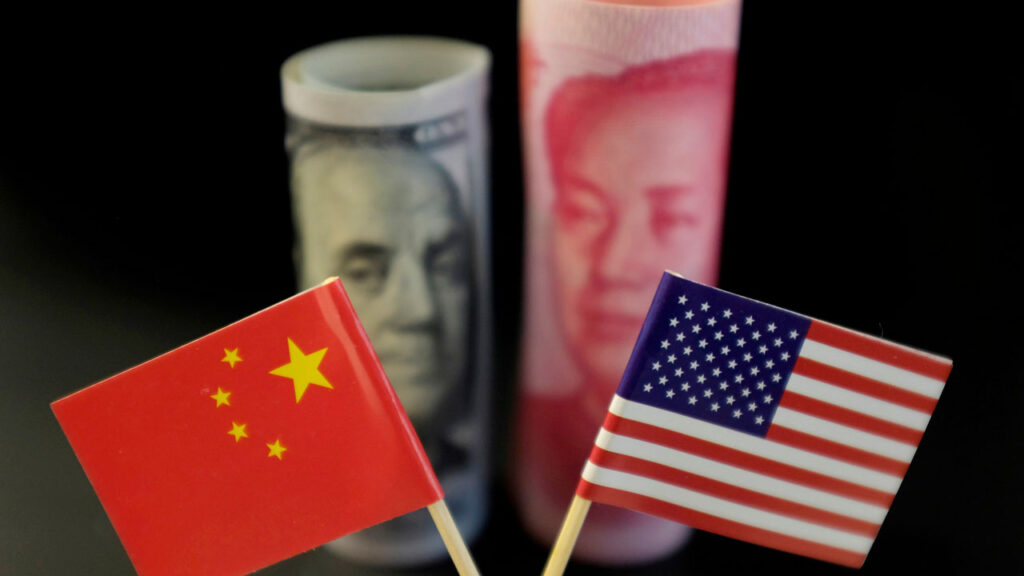
The global trade war reached a new level of intensity as the United States, China, and the European Union (EU) escalated their economic standoff, trading tariffs and retaliatory measures in rapid succession.
Less than 24 hours after U.S. President Donald Trump signed off on a last-minute amendment raising tariffs on Chinese imports to 104%, Beijing struck back with its own sweeping response. China announced an increase in tariffs on U.S. goods from 34% to a staggering 84%, effective April 10, 2025. Additionally, it blacklisted 12 U.S. companies and added six to its “unreliable entity” list, imposing restrictions on trade and investment activities in China.
American companies such as American Photonics and Novotech are now banned from exporting dual-use items to China. Entities like Shield AI and Sierra Nevada Corporation, placed on the unreliable entities list, face bans on all import/export operations and future investments in China.
The Chinese Ministry of Commerce, via its official X handle, warned, “If the U.S. insists on further escalating its economic and trade restrictions, China has the firm will and abundant means to take necessary counter-measures and fight to the bitter end.” The ministry also filed a formal complaint with the World Trade Organization (WTO), condemning the U.S. actions and warning of broader global economic fallout.
In a further retaliatory move, President Trump upped the ante by increasing tariffs on Chinese goods from 104% to 125%, declaring that all negotiations with Beijing had been terminated. Simultaneously, he announced a 90-day pause on reciprocal tariffs for over 75 other countries, citing their lack of retaliation.
Trump’s initial tariffs also targeted several other nations, including Nigeria, which saw a 14% duty imposed on its exports to the U.S.
The European Union, meanwhile, joined the fray, announcing tariffs of up to 25% on a wide array of U.S. goods. Though it expressed a preference for diplomacy, the EU made it clear that it would begin collecting these tariffs on April 15. The initial retaliation list, originally worth $28 billion, was scaled back, but targeted duties will still be enforced.
Notably, American bourbon was removed from the EU’s tariff list after Trump threatened steep duties on European wine—a move that could have significantly hurt French and Italian exports.
In response to China’s aggressive trade measures, U.S. Treasury Secretary Scott Bessent criticized Beijing’s posture, calling it “unfortunate” and labeling China the “worst offender” in the global trading system.
As China called on India and other global partners to stand against what it described as U.S. tariff abuse, the divide between major economies deepened. With the world’s two largest economies at loggerheads and the EU caught in the crossfire, global markets are bracing for a prolonged period of uncertainty and economic strain.