Former South Korean President Yoon Suk Yeol Sentenced to Life for Insurrection
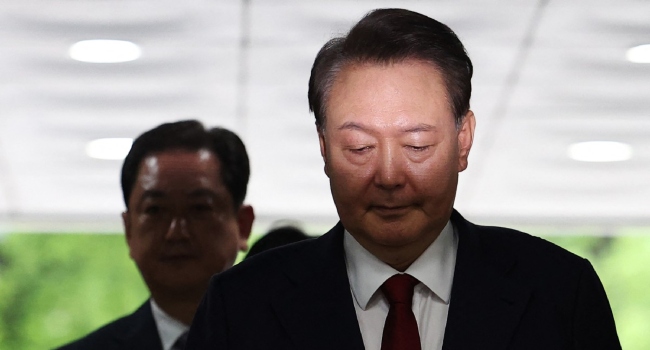
A court in South Korea on Thursday sentenced former president Yoon Suk Yeol to life imprisonment after finding him guilty of leading an insurrection through his 2024 declaration of martial law.
Delivering judgment at the Seoul Central District Court, presiding judge Ji Gwi-yeon ruled that Yoon had deployed troops to the National Assembly in an attempt to silence political opponents who had hindered his administration.
“The court finds that the intention was to paralyse the assembly for a considerable period,” Ji said, noting that the declaration of martial law imposed significant social costs and that Yoon had shown no clear remorse.
Yoon, 65, a hardline conservative, had abruptly declared martial law in a televised address in December 2024, claiming drastic measures were necessary to root out “anti-state forces” within the legislature. Lawmakers later voted to lift the order six hours after it was imposed, following dramatic scenes in which staff barricaded the assembly building with office furniture to prevent armed troops from entering.
He was subsequently impeached, arrested and charged with multiple offences, including insurrection and obstruction of justice.
Prosecutors had urged the court to impose the death penalty, the maximum punishment available under South Korean law for insurrection. However, the country has maintained an unofficial moratorium on executions since 1997, meaning a death sentence would effectively amount to life imprisonment.
Former defence minister Kim Yong-hyun was also sentenced to 30 years in prison for his role in the crisis.
Under South Korean law, only life imprisonment or death may be imposed for insurrection-related offences. Yoon had previously received a five-year sentence on separate charges, while several senior officials implicated in the crisis are facing lengthy prison terms.
Public Reaction and Security Measures
Thousands of supporters gathered outside the courthouse ahead of the verdict, holding placards bearing messages of support for the former president. Police officers in neon jackets established barricades using buses to prevent unrest following the ruling.
Yoon has been held in solitary confinement while contesting multiple criminal trials. He has consistently denied wrongdoing, arguing that his actions were aimed at “safeguarding freedom” and restoring constitutional order against what he described as an opposition-led “legislative dictatorship.”
Prosecutors, however, characterised his actions as an insurrection driven by a desire for long-term authoritarian rule.
The martial law declaration triggered mass protests, rattled financial markets and caught key allies, including the United States, off guard.
The crisis revived painful memories of military coups that disrupted the country between 1960 and 1980, challenging its reputation as one of Asia’s most stable democracies.
In a related development, Yoon’s wife, Kim Keon Hee, was sentenced in January to 20 months in prison on unrelated bribery charges dating back to her time as first lady.





