Fintiri’s Defection to APC Reshapes North-East Politics Ahead of 2027
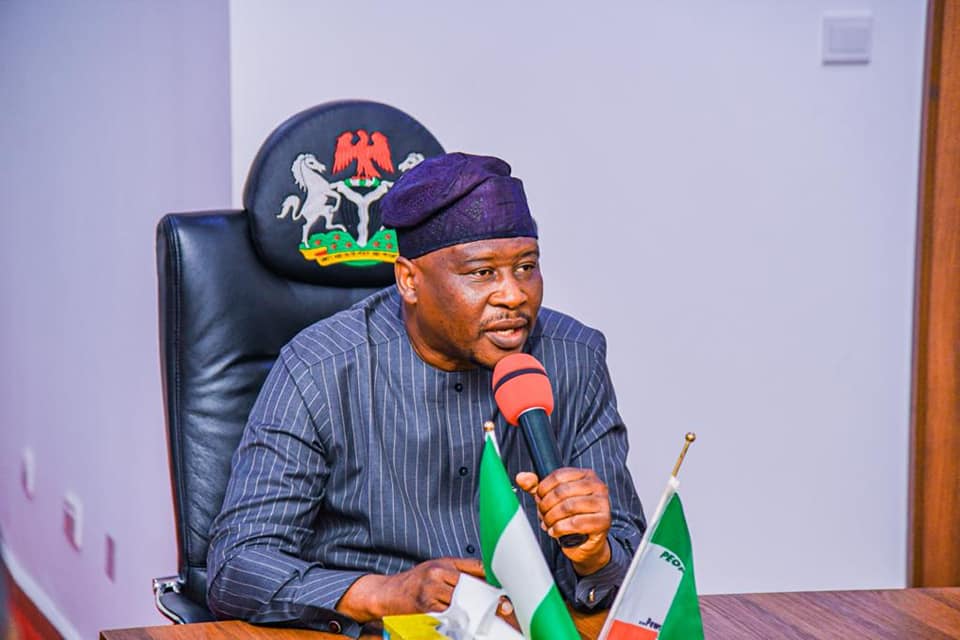
The defection of Adamawa State Governor, Ahmadu Umaru Fintiri, from the Peoples Democratic Party (PDP) to the ruling All Progressives Congress (APC) has triggered fresh political realignments in the North-East ahead of the 2027 general elections.
While critics describe the move as political self-preservation, supporters argue it reflects pragmatic repositioning in a rapidly shifting national landscape. The development also signals to Bola Ahmed Tinubu that the North-East could consolidate behind the APC in 2027 regardless of whether Vice President Kashim Shettima remains on the presidential ticket.
Fintiri’s exit from the PDP sparked intense debate in Adamawa State, with many questioning whether the decision was a calculated escape from mounting political pressures or a strategic alignment with the ruling party.
Former Vice President Atiku Abubakar, through his media aide, dismissed the wave of defections as evidence of systemic pressure rather than genuine popularity.
Similarly, former gubernatorial contender Dr Umar Ardo described the governor’s defection as a “last-minute” move that would not shield him from public scrutiny or legal accountability. Ardo alleged that changing party platforms cannot erase allegations of financial mismanagement or pending legal matters.
He argued that political realignment should not substitute for transparency and accountability, insisting that democratic norms are weakened when defections are perceived as survival tactics.
Fintiri’s political journey has been closely tied to the PDP. He rose to prominence under the party, serving as Speaker of the Adamawa State House of Assembly before winning the governorship in 2019 after defeating then-incumbent Jibrilla Bindow of the APC. He secured re-election in 2023 after a fiercely contested race against Senator Aishatu Dahiru Ahmed (Binani).
However, tensions between Fintiri and Atiku deepened in the lead-up to the 2023 presidential election, particularly after the governor aligned with Federal Capital Territory Minister Nyesom Wike and others who opposed Atiku’s candidacy.
Insiders suggest the turning point in Fintiri’s political recalibration came during President Tinubu’s recent working visit to Adamawa, where several state projects were commissioned. The visit was widely interpreted as cementing the governor’s reintegration into the APC fold.
Consolidating APC’s North-East Strategy
Observers believe Fintiri’s defection strengthens the APC’s foothold in the North-East, particularly amid speculation that the vice-presidential slot could shift to the North-West in 2027.
By joining the ruling party, Fintiri may enhance his political relevance post-2027, whether through backing potential governorship aspirants, seeking a Senate seat, or positioning for a federal appointment.
His return to the APC also alters the political equation in Adamawa. Should Atiku contest the presidency again, he would face a well-entrenched APC structure in his home state, bolstered by Fintiri’s political machinery.
“In the Interest of My People” Fintiri
Announcing his decision in a statewide broadcast on February 27, Fintiri said the move followed extensive consultations and was guided solely by Adamawa’s long-term interests.
He stated that aligning with the APC would enable the state to better leverage the “Renewed Hope Agenda” of President Tinubu in areas such as infrastructure, housing, and economic development.
The governor defected alongside members of his executive council, local government chairmen, lawmakers, and political aides. Twenty-two of twenty-four state executive council members publicly pledged loyalty and joined the APC.
Chairman of the Commissioners’ Forum, Aloysius Babadoke, said the commissioners resolved collectively to follow the governor, praising his leadership and development strides.
Similarly, 39 Special Advisers and 14 Local Government chairmen declared their support for the move, describing it as strategic and necessary for Adamawa’s future positioning.
The PDP swiftly criticised the defection, describing it as political opportunism and a setback to multi-party democracy. In a statement by its National Publicity Secretary, Ini Ememobong, the party acknowledged Fintiri’s constitutional right to freedom of association but questioned the moral implications of the decision.
The party warned that history and public opinion would ultimately judge the actions of political leaders.
Whether Fintiri’s defection proves to be an escape from political vulnerability or a strategic berth toward renewed influence remains uncertain.
What is clear, however, is that his return to the APC has reshaped political alignments in Adamawa and reinforced the broader contest for dominance in the North-East as parties prepare for the 2027 presidential race.
The move underscores the fluidity of Nigeria’s party system where ideology often yields to strategy, survival, and the pursuit of political relevance.