FG Under Pressure as DMO Blames FX, Global Shocks for Rising Debt
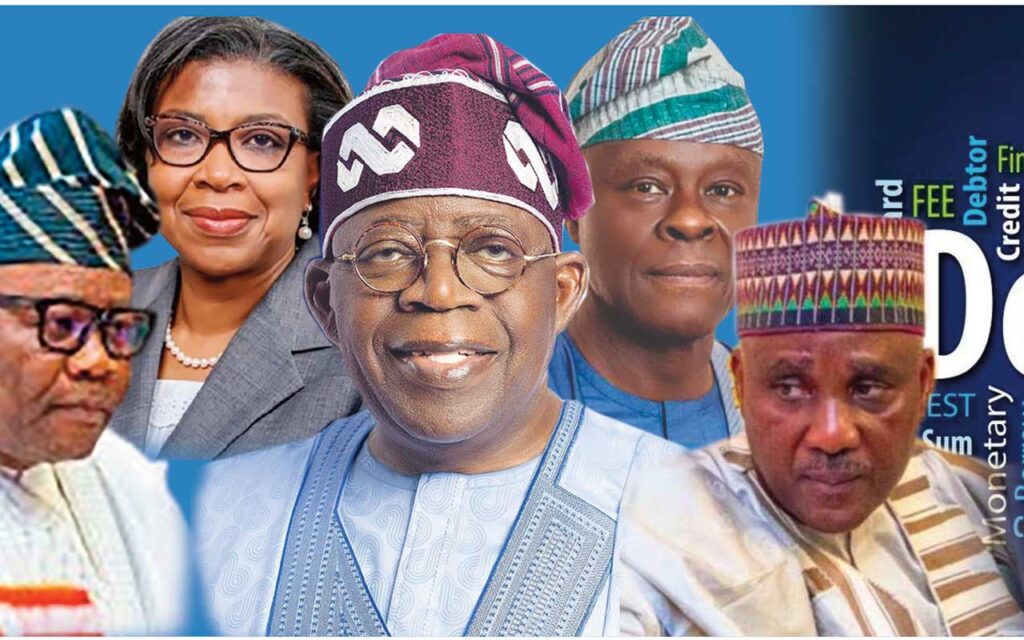
Nigeria’s public debt has again come under scrutiny as the Debt Management Office (DMO), the Labour Party (LP), and other stakeholders demand greater transparency in borrowing and record-keeping.
Although official figures put the country’s total debt stock at N149.39 trillion as of Q1 2025, the DMO and the Office of the Auditor-General of the Federation (OAuGF) have raised concerns about incomplete disclosures, particularly from some states that are behind in updating their debt records.
At the 11th Annual Conference of the West Africa Association of Public Accounts Committees (WAAPAC) in Abuja, DMO Director-General Patience Oniha, represented by Deputy Director of Policy Strategy and Risk Management Maryam Omar, warned that transparency is crucial to debt sustainability. She noted that Nigeria remains one of West Africa’s largest borrowers, alongside Ghana, Côte d’Ivoire, and Senegal, largely due to high global interest rates, volatile commodity prices, and weak domestic revenue.
“Our debt structure is highly exposed to foreign currency risk,” Oniha cautioned, stressing that volatile exchange rates and rising borrowing costs make Nigeria’s fiscal outlook vulnerable.
Auditor-General Shaakaa Chira disclosed that by December 2024, Nigeria’s debt had reached N143.5 trillion—N68.8 trillion external and N74.6 trillion domestic. While still under audit, the figures underscore the scale of the fiscal burden. He assured that his office would provide evidence-based, independent reports to strengthen parliamentary oversight.
The Nigeria Union of Journalists (NUJ) FCT Council Chairperson, Grace Ike, urged the media to amplify audit findings, ensuring debt accountability does not rest solely on parliament and auditors.
The debt debate has also sparked political controversy.
The House of Representatives Public Accounts Committee (PAC) dismissed reports that Speaker Tajudeen Abbas accused President Tinubu of reckless borrowing, calling such claims “false and misleading.”
However, the Labour Party (LP) insisted Abbas was right to highlight Nigeria’s dangerous debt trajectory, accusing the APC-led government of recklessness. The party noted that in just three months, debt stock jumped from N121.7 trillion to N149.39 trillion, with 61% of government revenue consumed by debt servicing.
LP’s statement warned:
“These figures are a death sentence on Nigeria’s economic future. Any new loan proposal without measurable growth and social impact must be rejected.”
The Presidency, however, dismissed opposition criticisms.
Sunday Dare, Special Adviser to the President on Media and Public Communication, argued that the rising debt figures are largely the product of naira depreciation, not reckless borrowing.
He stressed that Nigeria’s debt-to-GDP ratio (40–45%) remains moderate compared to other African economies like South Africa (70%) and Ghana (90%+).
Former presidential aide Reno Omokri added that Nigeria’s debt, measured in dollar terms, had actually fallen by $16 billion under Tinubu—from $113 billion at the end of Buhari’s tenure to $97 billion.
“Only Obasanjo and Tinubu have ever reduced Nigeria’s debt,” Omokri claimed.





