Disinformation Campaign Fuels Nigerian Support for Burkina Faso’s Junta Leader
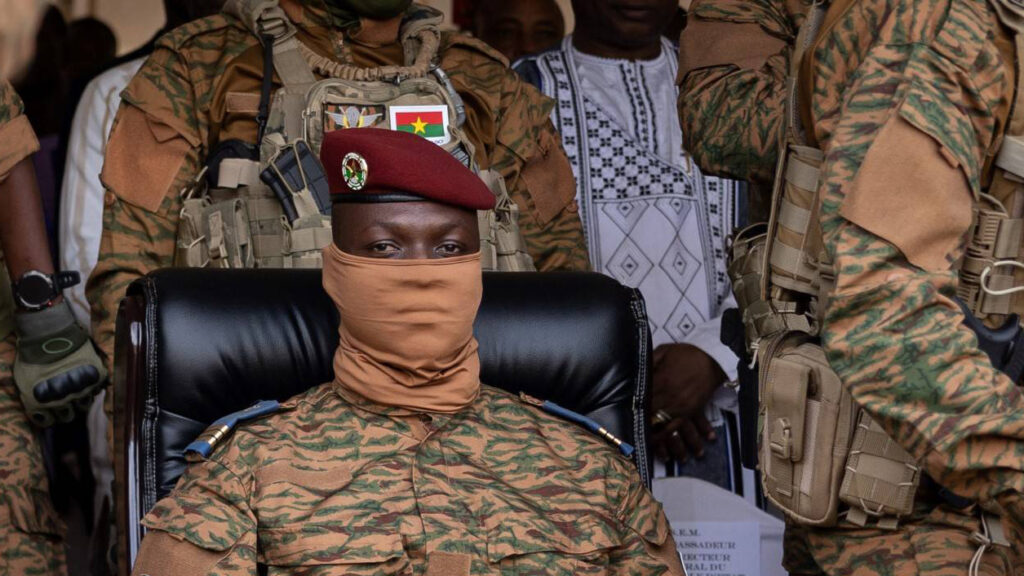
In a modest Lagos autobody shop, Kehinde Sanni smooths out dents and repaints scratched bumpers. Though he has never left Nigeria, his admiration for Burkina Faso’s military leader, Captain Ibrahim Traore, is unwavering.
“Nigeria needs someone like Ibrahim Traore. He’s doing well for his country,” Sanni said.
That sentiment, increasingly echoed online, is largely shaped by a flood of viral videos, memes, and social media posts — many of them misleading or outright false — portraying Traore as a bold reformer defying Western dominance and restoring national pride.
Traore seized power in a coup in September 2022, riding a wave of anti-French sentiment across the Sahel. He has since forged closer ties with Mali and Niger, and the three military regimes recently launched the Alliance of Sahel States, with their foreign ministers meeting in Moscow last month to deepen cooperation with Russia.
While critics condemn Traore’s clampdown on civil liberties, social media influencers paint him as a saviour. Nigerian actress and politician Hilda Dokubo recently posted: “Ibrahim Traore is all the proof Nigerians need to know that a country takes the shape of its leadership.”
Such statements highlight the growing impact of what analysts describe as a coordinated, foreign-backed propaganda campaign in West Africa, one that idealises military rule and promotes Russia as a geopolitical ally.
“This growing admiration for Traore in Nigeria poses serious risks to national security and democratic stability,” warned Malik Samuel, a senior researcher at Good Governance Africa. “It normalises military intervention and paves the way for foreign ideological interference.”
Russian Propaganda Playbook
The allure of Traore’s image comes as Nigerians endure a severe cost-of-living crisis under President Bola Ahmed Tinubu’s economic reforms.
Many see Traore’s supposed successes as a contrast — young, defiant, and open to Russian cooperation, particularly through Wagner-linked forces now rebranded as the “Africa Corps.”
Yet much of that image is built on disinformation. AFP fact-checks have debunked several viral claims — including videos of housing projects falsely credited to Traore, which actually depict construction in Algeria.
Across Francophone West Africa, similar tactics are in play. A video from Burkina Faso’s cement plant inauguration falsely claimed Traore had slashed prices. Before his own ouster, Niger’s President Mohamed Bazoum accused Wagner of backing regional disinformation campaigns.
“These narratives are part of a broader Russian strategy in Africa,” explained analyst Ikemesit Effiong of SBM Intelligence. “They influence public opinion, glorify military regimes, and paint Moscow as a respectful alternative to the West.”
Philip Obaji, a journalist who investigates Russian influence in Africa, said propaganda content is often created by Russian units, then funneled to local influencers via intermediaries for widespread distribution.
The Reality Behind the Narrative
Despite the curated image, the reality in Burkina Faso is grim. The country remains trapped in violent conflict, with jihadist attacks by Al-Qaeda and Islamic State affiliates killing tens of thousands since 2015. According to the 2025 Global Terrorism Index, Burkina Faso is now the world’s most terrorism-impacted country — for the second year running.
Civil liberties have also eroded under Traore. Journalists and dissidents have been detained, harassed, or forced into exile under the pretext of fighting terrorism. Maixent Some, a financial analyst critical of the regime, was declared wanted by the junta in April.
Meanwhile, Russian influence is increasingly visible. Russian flags have become common at pro-junta rallies. In August 2024, at least 90 Nigerians were arrested while waving the Russian flag during a protest against economic hardship.
As Traore’s image continues to be shaped by social media manipulation, analysts warn that Nigeria — and the broader region — must remain vigilant to the democratic and security threats posed by glorifying authoritarian rule.





