Cooking Gas Scarcity Pushes Price to ₦3,000 Per Kg, Households Struggle in Lagos, Ogun
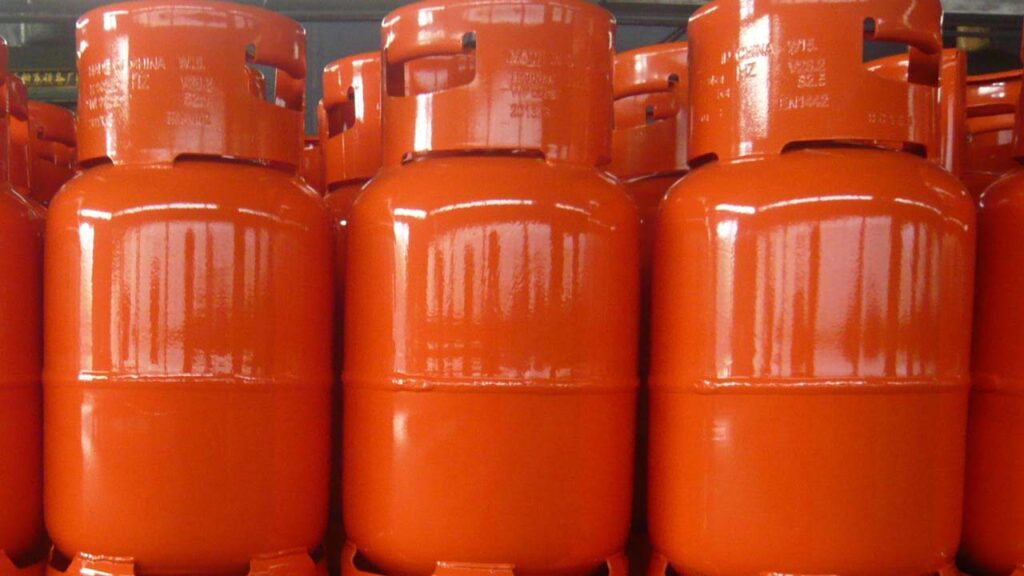
Despite recent data from the National Bureau of Statistics (NBS) showing a decline in the average cost of refilling a 5kg cylinder of Liquefied Petroleum Gas (LPG)—from ₦8,243.79 in July to ₦6,404.02 in August 2025—market surveys by The Guardian reveal a sharp surge in retail prices, with a kilogram now selling for between ₦1,800 and ₦3,500 in parts of Lagos and Ogun states.
In Ijeshatedo, Lagos, residents described the struggle to refill their gas cylinders as exhausting. Long queues have become a daily reality, with retailers charging between ₦3,000 and ₦3,500 per kilogram, while filling stations offer slightly lower rates of around ₦2,500—but often with hundreds of customers waiting. One consumer recounted spending hours searching for gas the previous day before giving up in frustration.
Many households are now turning to electric or charcoal alternatives as the scarcity deepens. In Atan, Ogun State, residents reported paying between ₦2,000 and ₦2,500 under similar stressful conditions. In Igando, prices ranged from ₦1,800 to ₦2,000 depending on the location, with residents lamenting both the rising cost and limited availability.
President of the Nigerian Association of Liquefied Petroleum Gas Marketers (NALPGAM), Olatunbosun Oladapo, attributed the scarcity and price surge to temporary supply disruptions caused by the PENGASSAN strike and maintenance at the Dangote Refinery. He explained that the strike affected vessel berthing at Lagos terminals, while the NLNG supplied Port Harcourt in large volumes—why the South-South region experienced less scarcity. He assured that normalcy is expected to return within days as loading resumes at Dangote and other facilities.
Oladapo emphasized that most LPG supply now comes from local production, with minimal importation due to improved domestic output.
Energy law expert and Partner at Bloomfield LP, Dr. Ayodele Oni, noted that despite improved upstream gas and NGL production, Nigeria continues to face periodic domestic shortages and price spikes. He explained that increased production does not automatically translate into more bottled LPG for local use, as a significant portion is monetised through exports rather than directed to the domestic market.
Domestic gas sales reportedly rose by about 22% year-on-year to roughly 65,632 metric tonnes in March 2025, but much of that volume still bypasses the local retail chain.





