Budget Turmoil Deepens as Tinubu Prepares 2026 Estimates Without Approved MTEF
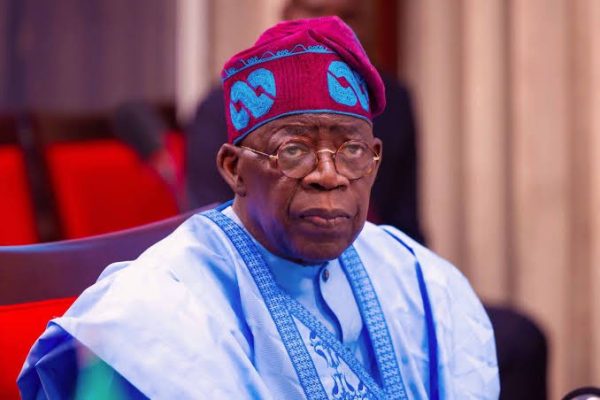
Nigeria’s fiscal anxieties have intensified as President Bola Ahmed Tinubu prepares to present the 2026 Appropriation Bill to the National Assembly next week—despite the delayed submission and non-passage of the Medium-Term Expenditure Framework (MTEF) and Fiscal Strategy Paper (FSP), the legally required foundation for the annual budget.
The development has reignited concerns about the diminishing autonomy of the 10th National Assembly under Senate President Godswill Akpabio, with lawmakers and analysts questioning the legal and procedural basis on which the 2026 budget estimates will be scrutinised or approved.
President Tinubu had transmitted the 2026–2028 MTEF/FSP—approved by the Federal Executive Council on December 3—to the Senate with a call for “expeditious legislative action.” But the document, which by law should have been submitted by the end of August, arrived four months late, disrupting the statutory timetable for budget preparation.
A frustrated lawmaker described the situation as “a dangerous dimension,” citing Section 11(1)(b) of the Fiscal Responsibility Act, which mandates that the President lay the MTEF “not later than four months before the commencement of the next financial year.”
“The MTEF gives life to the budget. Without it, the budget cannot legally begin,” he said, noting that the FRA also requires government corporations to submit their estimates by August—another process now in disarray.
70% Capital Rollover Fuels Concerns Over Fiscal Discipline
The uncertainty worsened when the Federal Government directed ministries and agencies to roll over 70 per cent of their 2025 capital allocations into 2026, citing revenue constraints and the need to prioritise ongoing projects.
The directive, contained in the 2026 Abridged Budget Call Circular, bars MDAs from proposing new capital projects and instructs them to “upload 70 per cent of the 2025 budget to continue in FY2026.”
A development expert described the move as “a sign of failed fiscal discipline,” warning that multiple overlapping budgets create “room for corruption” and deprive Nigerians of timely project delivery.
Senate Halts MTEF Consideration Pending Performance Reports
Amid the confusion, the Senate Committee on Finance has suspended consideration of the 2026–2028 MTEF/FSP until the executive provides detailed performance reports for the 2024 and 2025 budgets.
After a closed-door meeting with Finance Minister Wale Edun, the Accountant-General, and the Budget Office, Committee Chair Senator Mohammed Sani Musa said deliberations would resume only after receiving full documentation on revenue performance, capital execution, and fund releases.
Meanwhile, the Director-General of the Budget Office painted a bleak picture: crude oil revenues have fallen below projections, inflation has undermined fiscal assumptions, and statutory provisions of the Petroleum Industry Act have significantly reduced inflows to the Federation Account.
Co-founder of BudgIT, Seun Onigbinde, warned that Nigeria’s budgeting framework has become “chaotic and lacking accountability.” He noted that multiple delays have resulted in the 2023 and 2024 budgets being extended into 2025, while capital implementation for 2025 only began in October.
“What we have now is a system without a calendar,” he said. “Even in past administrations, budgets signed on January 1 were a covenant. That covenant has been broken.”
He further disclosed that, as of mid-November, neither the MTEF nor the draft 2026 budget had reached the Federal Executive Council—an indication, he said, of deteriorating fiscal discipline.
Experts warn that Nigeria risks running several overlapping budgets simultaneously as unfinished capital projects from previous years clash with new spending demands. Contractors remain unpaid, agencies struggle to defend their estimates amid rushed sessions, and revenue projections remain unrealistic.
Despite the concerns, the Federal Government insists that the 2026 budget will focus on ward-based development, infrastructure, security and domestic production—key pillars of its $1 trillion economy ambition.
Yet, without an approved MTEF and with the Senate withholding consideration, uncertainty surrounds the legal foundation of the 2026 budget presentation expected next week.
Ayodele Scores Tinubu Low on Fiscal Policies
Former presidential candidate in the 2023 elections, Prof. Oluwamuyiwa Favour Ayodele, has given a poor assessment of President Tinubu’s economic policies, warning that current conditions are deepening hardship for Nigerians.
Speaking on Business Diet on WellsRadio 89.3FM, Ibadan, Ayodele described the state of the economy as “awkward, backward and retrogressive,” citing high inflation and worsening business conditions.
“With inflation at 24.2 per cent, you can tell the plight of Nigerians,” he said, lamenting excessive taxation, low productivity and unreliable electricity supply.
He blamed “poor policy direction” for the country’s economic challenges, noting that without relatable and inclusive policies, national growth would remain elusive.
Ayodele, who has already declared his intention to contest the 2027 presidential election—his third attempt—insisted that Nigeria’s progress depends on sound economic policies that drive production, reduce burdens on citizens, and stabilise industry.





