1,000-Year-Old Indian Skeleton Finally Housed in Museum After Six Years

A 1,000-year-old human skeleton discovered in a cross-legged sitting position in western India has finally been moved to a museum, six years after its excavation.
The skeleton, believed to date back to the Solanki dynasty (940–1300 CE), was unearthed in Vadnagar, Gujarat in 2019 but had since remained in a makeshift tarpaulin shelter, exposed to the elements due to bureaucratic delays over custody.
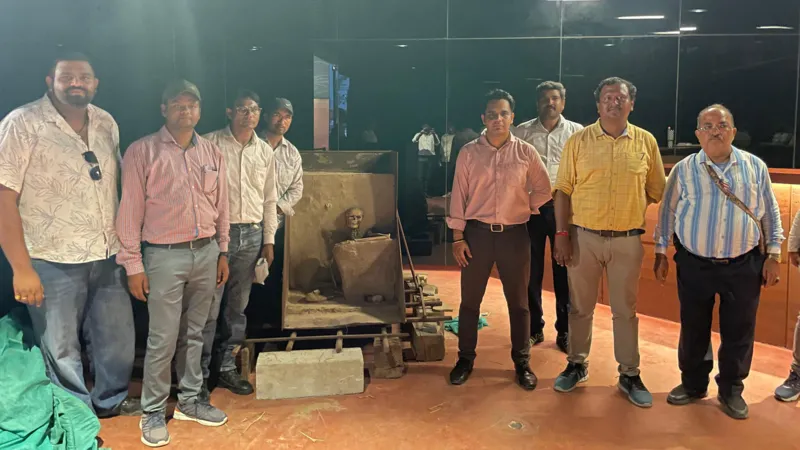
On Thursday, it was transported with utmost care to the Archaeological Experiential Museum in Vadnagar, just a few miles from its original site. Museum curator Mahendra Surela confirmed to the BBC that the move was supervised by several experts and will be followed by further examination by the Archaeological Survey of India (ASI).

The skeleton is currently displayed near the museum’s reception area, fenced by a protective barrier. Officials are considering relocating it to the second floor, where a photograph of the skeleton already exists.
The seated remains, with its right arm resting on its lap and left arm suspended as if on a stick, have drawn significant attention from both researchers and the public. Archaeologist Abhijit Ambekar, who led the discovery, called it a rare and significant find, noting that similar skeletons have only been found at three other sites in India.
Experts believe the skeleton may provide valuable insight into “samadhi burials”, an ancient Hindu practice of burying revered figures rather than cremating them. The preservation of the skeleton was made possible due to the undisturbed soil composition, which shielded it from erosion over centuries.
The skeleton’s museum display is expected to draw visitors and researchers alike, as efforts continue to better understand this unique piece of India’s archaeological heritage.