₦20,000 Annual Uniform Allowance Grossly Inadequate, Nurses Demand Reforms — NANNM
By Titilope Johnson
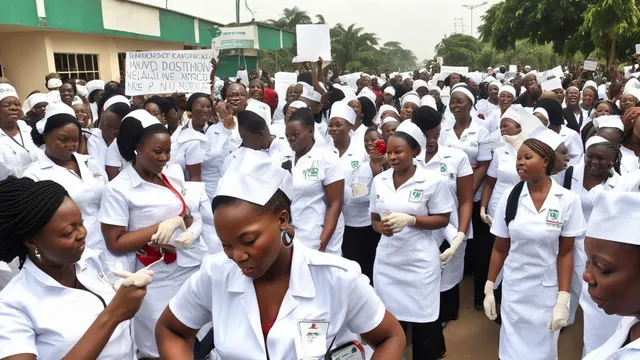
The National Association of Nigerian Nurses and Midwives (NANNM) has described the ₦20,000 annual uniform allowance for nurses as grossly insufficient, urging the Federal Government to implement systemic reforms, including the creation of a Directorate of Nursing Services at the Ministry of Health, to be headed by a registered nurse.
The demand was made on Thursday during the National Examiners Workshop jointly organised by NANNM and the Nursing and Midwifery Council of Nigeria (NMCN) in Abakaliki, Ebonyi State, amid the union’s ongoing seven-day nationwide warning strike.
Speaking at the opening ceremony, Comrade Obasi Chukwu, NANNM Chairman for Ebonyi State, said the workshop aims to strengthen examiners’ capacity for effective professional assessments.
He lauded the Nwifuru administration for its support, including:
Upgrading the state’s School of Nursing to a College offering both Nursing and Midwifery programmes
Constructing a ₦500 million ultramodern hostel for students
The workshop was officially opened by Deputy Governor Princess Patricia Obila, who represented Governor Francis Ogbonna Nwifuru.
Chukwu reaffirmed full compliance with the nationwide strike in Ebonyi, affecting key facilities such as:
National Obstetric Fistula Centre
David Umahi Federal University Teaching Hospital
He blamed the industrial action on the Federal Government’s failure to address key issues, including:
Poor remuneration and welfare packages
Non-centralisation of internship placements
Inadequate recruitment of nurses
Disregard for court rulings in favour of the profession
He criticised the ₦20,000 annual uniform allowance as inadequate and called for holistic reforms to improve working conditions.
“We are not just fighting for ourselves. We are advocating for conditions that will enable nurses to deliver better care to Nigerians. A well-treated nurse is a more effective caregiver,” Chukwu said.
The warning strike, which began earlier this week, will last seven days pending further negotiations with the Federal Government.