Islamist Militant Attacks Rise Sharply in Nigeria Despite US Intervention – ACLED Report
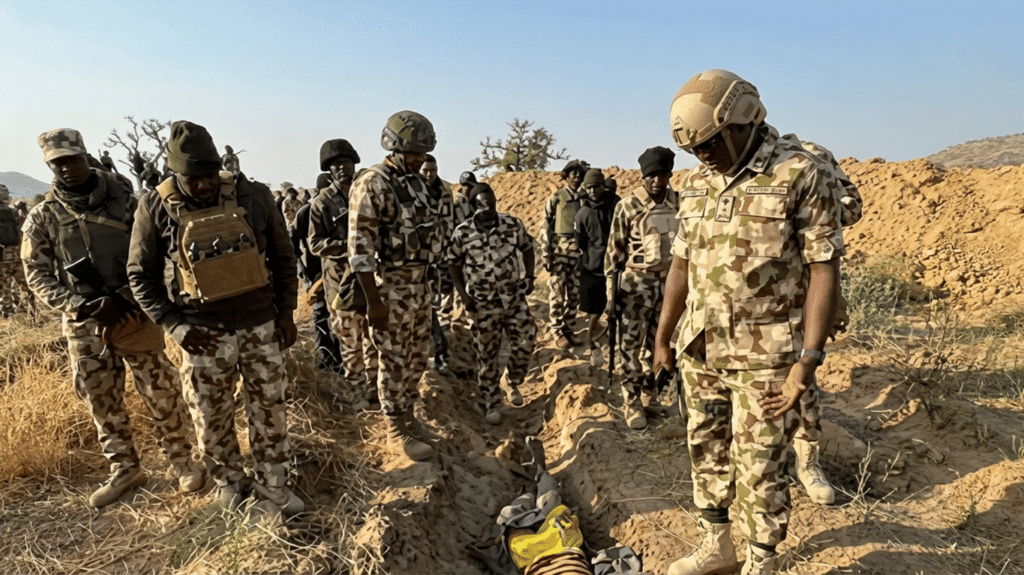
Islamist militant attacks are increasing across Nigeria and its border regions with Niger and Benin, despite recent military intervention and support from the United States, according to a new report by the Armed Conflict Location & Event Data Project (ACLED).
The report revealed that violent incidents involving groups linked to al-Qaeda and the Islamic State in the Niger–Benin–Nigeria tri-border area surged by 90 percent between 2024 and 2025. During the same period, fatalities more than doubled, exceeding 1,000 deaths, highlighting a worsening regional security situation.
ACLED noted that jihadist groups are expanding their presence beyond Nigeria’s northeast into parts of the northwest and central regions, including Sokoto, Kebbi, Niger, and Kwara states. The militants have also extended operations into neighbouring areas such as Alibori and Borgou in Benin and the Dosso region of Niger.
Nigeria has battled Islamist insurgency for over 15 years, primarily involving Boko Haram and the Islamic State West Africa Province (ISWAP). However, analysts warn that newer factions linked to al-Qaeda and the Islamic State are exploiting weak governance, porous borders, and remote forest areas to establish new operational bases, recruitment networks, and supply routes.
The report also highlighted the growing influence of militant groups such as Jama’at Nusrat al-Islam wal-Muslimin (JNIM) and the Islamic State in the Sahel Province (ISSP), which continue to strengthen their foothold across West Africa.
The escalation in violence persists despite increased US involvement. In December 2025, the United States carried out airstrikes in northwestern Nigeria and deployed military personnel to support and train Nigerian security forces in combating extremist groups.
Earlier, in October 2025, the US government redesignated Nigeria as a Country of Particular Concern over religious violence, increasing international scrutiny and the possibility of sanctions.
Despite these efforts, conflict analysts say militant groups are adapting quickly. ACLED reported increased communication and coordination among extremist factions in the tri-border region, suggesting competition among groups that often leads to intensified violence.
Regional security cooperation has also weakened in recent years, particularly following military coups in Mali, Burkina Faso, and Niger. These developments have strained intelligence sharing and joint counterterrorism operations across West Africa, creating opportunities for militant groups to expand.
Nigeria’s security forces continue to face multiple threats, including insurgency, banditry, kidnapping, and communal violence, stretching military resources and complicating efforts to stabilise affected regions.
Humanitarian organisations warn that civilians remain the most vulnerable, with thousands displaced from their homes and forced into camps or across international borders.
The report concluded that the increasing spread and intensity of militant activity signal a growing regional security crisis that could extend beyond Nigeria if not urgently addressed through stronger coordination, improved governance, and sustained security interventions.





