US Congressman Riley Moore Urges End to Sharia, Blasphemy Laws in Nigeria, Submits Report to Trump
By Titilope Johnson
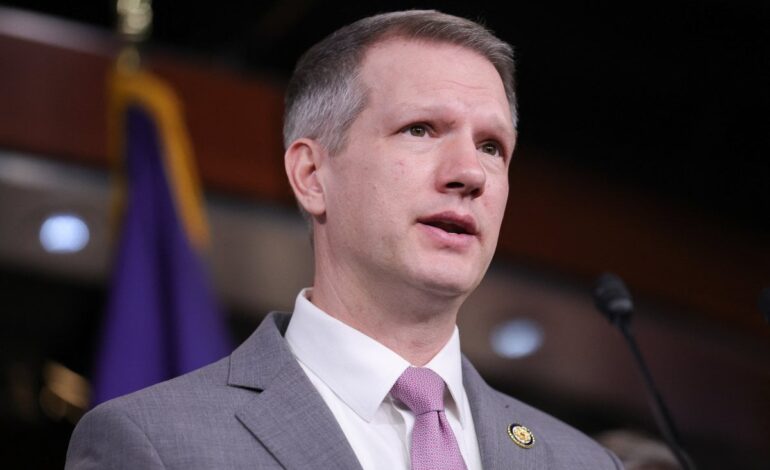
US Congressman Riley Moore has presented a congressional report to former President Donald Trump, calling for sweeping measures to address violence against Christian communities in Nigeria, including the repeal of sharia and blasphemy laws in parts of the country.
In a press release issued in Washington, Moore said he joined members of the House Committees on Appropriations and Foreign Affairs at the White House to submit what he described as a comprehensive report outlining actions to end the persecution of Christians in Nigeria and counter extremist violence.
The move follows Trump’s redesignation of Nigeria as a Country of Particular Concern (CPC) on October 31, 2025, under the US International Religious Freedom Act. Moore said he and House Appropriations Committee Chairman Tom Cole were tasked with leading a congressional investigation into alleged persecution of Christian communities and broader security challenges in Nigeria.
According to Moore, the report was compiled after months of investigation, including a bipartisan fact-finding trip to Nigeria, hearings with expert witnesses, consultations with religious leaders, meetings with internally displaced persons, and engagements with senior Nigerian officials.
“I travelled on a bipartisan delegation to Nigeria and saw with my own eyes the horrific atrocities Christians face, and the instability the Nigerian government must combat,” Moore said.
The report proposes:
A bilateral US–Nigeria security agreement to protect vulnerable Christian communities and dismantle jihadist networks.
Withholding certain US funds pending demonstrable action by the Nigerian government to curb violence.
Sanctions and visa restrictions against individuals and groups accused of religious persecution.
Repeal of sharia and blasphemy laws in parts of northern Nigeria.
Technical support to address violence linked to armed groups, including criminal militias.
Coordination with international partners such as France, Hungary, and the United Kingdom.
Twelve northern Nigerian states currently operate parallel sharia legal systems alongside secular courts, mainly for civil and personal matters involving Muslim residents. Human rights groups have previously raised concerns about blasphemy laws and due process in certain cases.
Nigeria continues to face multiple security crises, including the insurgency by Boko Haram and Islamic State West Africa Province in the north-east, banditry in the north-west and north-central regions, and farmer–herder conflicts in the Middle Belt. Nigerian authorities have consistently rejected allegations of state-sponsored religious persecution, maintaining that insecurity affects citizens of all faiths and ethnic backgrounds.
The White House has not yet announced specific policy steps following the submission of the report. Analysts note that any move to condition US assistance or impose sanctions could impact diplomatic relations between Nigeria and the United States, which cooperate on counter-terrorism, regional security, and trade.