2027 Credibility Battle Shifts to INEC as Tinubu Signs Amended Electoral Act
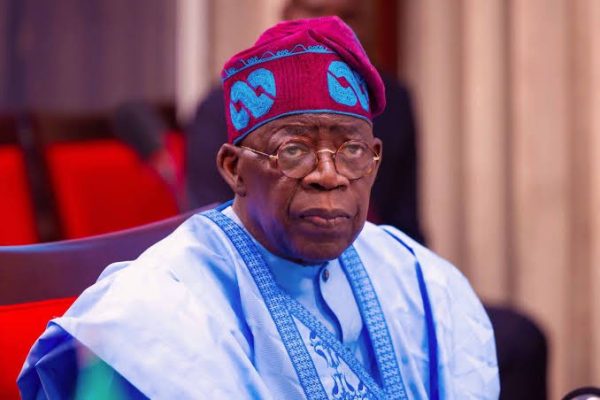
President Bola Tinubu yesterday assented to the Electoral Act (Amendment) Bill 2026, concluding weeks of legislative debate but igniting fresh controversy over the integrity of the 2027 general elections.
The signing, which took place at the State House, Abuja, formalises the legal framework for the polls just days after the Independent National Electoral Commission (INEC) released the official election timetable.
Speaking after signing the bill, Tinubu commended the National Assembly for what he described as a rigorous and patriotic process aimed at strengthening democratic stability and preventing voter disenfranchisement.
He stressed that while technology plays a supportive role, elections remain fundamentally human-driven. According to him, manual voting and collation remain central to Nigeria’s electoral system, with electronic transmission serving as a complementary mechanism.
The President urged stakeholders to ensure clarity in implementation to avoid confusion and glitches that could undermine public confidence.
However, opposition parties and civil society groups criticised the swift assent less than 48 hours after passage describing it as troubling and potentially harmful to electoral transparency.
The Peoples Democratic Party (PDP) labelled the amendment a betrayal, particularly faulting the removal of mandatory electronic transmission of results from polling units. The party argued that the change weakens safeguards against manipulation and intrudes into the internal affairs of political parties by restricting primary election methods.
Similarly, the Labour Party caucus in the House of Representatives condemned what it termed a “hurried” assent, questioning whether adequate executive review was conducted before the President signed the bill.
SDP, Civic Groups Signal Legal Action
The 2023 presidential candidate of the Social Democratic Party (SDP), Adewole Adebayo, described the amendment as a “planned hatchet job” against Nigeria’s democracy and signalled possible constitutional challenges.
Socio-cultural groups, including Afenifere and Ohanaeze Ndigbo, also expressed fears that ambiguities surrounding electronic transmission could erode trust ahead of 2027.
The Movement for Credible Elections (MCE) warned of nationwide resistance, rejecting what it described as loopholes created by the removal of explicit “real-time” transmission language and the introduction of undefined failure clauses that could permit a fallback to manual processes.
In contrast, Minister of the Federal Capital Territory, Nyesom Wike, praised Tinubu and the National Assembly for what he called decisive leadership, dismissing criticisms as politically motivated. He maintained that periodic legal reforms are essential for institutional growth and democratic consolidation.
A civic advocate from Enough is Enough Nigeria (EiE) acknowledged that the law contains some reforms, including provisions allowing voters to download their Permanent Voter Cards from INEC’s website. However, concerns remain over reduced funding timelines for INEC and ambiguities in defining electronic transmission “failure.”
With the amendment now law, attention shifts squarely to INEC for implementation. Political observers say the credibility of the 2027 elections may ultimately depend not only on the wording of the Act but on how its provisions are applied and tested in practice.





