New Tax Regime Tightens Grip on Cement Industry, Worsens Housing Deficit
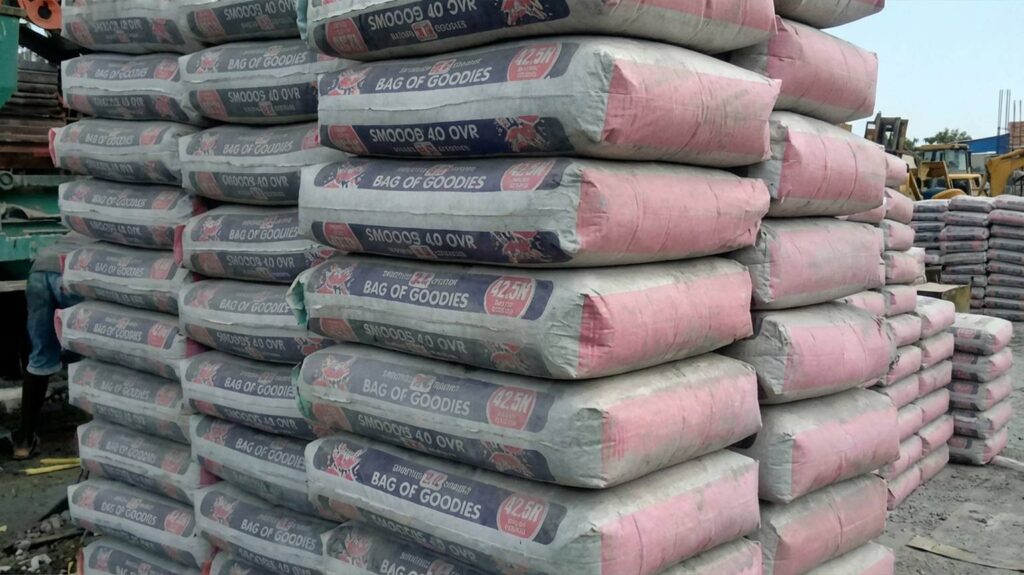
The recent surge in cement prices has been linked to Nigeria’s new tax regime, rising logistics costs and continued reliance on imported inputs, raising concerns over its short-, medium- and long-term implications for housing delivery nationwide. Industry stakeholders warn that both private developers and government-funded housing projects are already feeling the strain.
Nigeria’s revised tax framework is fast becoming a major pressure point for the cement industry, compounding existing challenges such as foreign exchange volatility, energy costs and expensive logistics.
Industry operators say the widening tax net, higher effective tax rates and multiple levies imposed at federal and state levels have significantly increased operating costs for cement manufacturers. These additional costs, they noted, are inevitably passed on to builders, developers and end-users.
Cement production remains one of the most capital-intensive industries in the country, requiring heavy investment in plants, power generation, haulage infrastructure and maintenance. Under the new tax regime, manufacturers now face higher corporate tax exposure, stricter compliance requirements and overlapping statutory charges, including customs duties, value-added tax (VAT), education tax and various regulatory levies.
Executives in the sector explained that the cumulative tax burden has risen sharply over the past year, even as operating conditions remain difficult. The impact is particularly severe for firms that still depend on imported inputs such as gypsum, spare parts and specialised equipment, which are priced in foreign currency before taxes are applied.
With limited capacity to absorb the rising costs, cement producers have resorted to incremental price increases. The Guardian learnt that manufacturers added about N500 to the price of a 50kg bag of cement in January, when the new tax measures took effect.
As a result, cement prices have climbed to between N11,000 and N11,500 per bag in early 2026, compared with N10,000 to N10,500 in late 2025. In Abuja, Lagos and Ogun states, prices now sell for as much as N11,500 per bag, while parts of the eastern region record prices of around N11,000, depending on brand and proximity to production plants.
For developers, the rising cost of cement—one of the largest inputs in construction—has tightened budgets and increased uncertainty.
Many have slowed project starts, adjusted designs or adopted phased construction approaches to remain viable.
Built-environment professionals note that Nigeria’s already slow housing supply growth has worsened affordability pressures. With fewer new homes coming to market relative to demand, house prices and rents remain elevated, a situation further aggravated by rising construction material costs.
Beyond taxation, sustained demand from infrastructure projects, currency volatility and the cost of imported inputs continue to push cement prices upward, despite Nigeria’s abundant limestone reserves. The knock-on effects include higher rents and overall construction costs, as developers and landlords pass on increased expenses to buyers and tenants.
Experts warn that unless fiscal policies are recalibrated, elevated cement prices could further slow construction activity, deepening Nigeria’s housing deficit and infrastructure gap. Shrinking housing supply, they noted, is creating a self-reinforcing cycle in which higher costs delay new builds, shortages persist and prices continue to rise.
Developers say cement pricing has become increasingly unpredictable, complicating project budgeting. Some have redesigned developments, scaled down unit sizes or postponed new projects altogether.
While the Federal Government has repeatedly urged cement producers to lower prices in the interest of national development, industry players insist that sustainable price reductions are unlikely unless structural cost drivers—particularly taxation—are addressed.
The timing of the tax reforms has also drawn criticism. The construction sector is still recovering from macroeconomic shocks, high inflation and weakened consumer purchasing power. Economists warn that imposing higher taxes during such a fragile recovery risks suppressing output rather than boosting revenue.
In the cement sector, higher taxes have translated into higher prices, weaker demand and slower construction activity, ultimately limiting growth and employment across the value chain.
Experts argue that the government still has room to moderate cement prices without undermining revenue goals. Suggested measures include targeted tax relief for critical building materials, temporary tax holidays, reduced VAT on cement and incentives tied to local sourcing of inputs.
They also advocate tax harmonisation to eliminate duplication and reduce compliance costs, particularly between federal and state authorities. In the long term, supporting large-scale gypsum mining and processing through tax credits, infrastructure investment and public-private partnerships could reduce import dependence and foreign exchange exposure.
Logistics and energy reforms are also seen as crucial. Investments in alternative fuels such as compressed natural gas (CNG), expanded rail freight capacity and improved road networks could significantly lower distribution costs. Stronger competition oversight, experts say, is equally important to ensure that cost reductions translate into lower prices for consumers.
With cement accounting for a significant share of construction costs, higher prices threaten the viability of existing housing budgets. Governments may be forced to build fewer housing units, seek supplementary funding or revise affordable housing targets downward as per-unit costs rise.
At the state level, housing agencies may delay new projects, prioritise existing ones or scale back estate sizes. Social and mass housing schemes are particularly vulnerable, as affordability targets limit the extent to which higher costs can be passed on to beneficiaries.
Beyond housing, elevated cement prices also increase the cost of estate infrastructure such as roads, drainage and utilities. In major cities, experts warn that worsening affordability could push more households into informal settlements or distant suburbs with limited services.
If prices remain high, governments may be compelled to reallocate housing budgets, extend project timelines or revise unit cost benchmarks—steps that delay the social and economic benefits of housing delivery.
A former president of the Nigerian Institute of Builders (NIOB), Mr. Kunle Awobodu, linked the recent price increases directly to the new tax regime. “We have begun to see the impact within the real estate industry,” he said, adding that uncertainty has grown over how deeply the taxes will affect ongoing and future projects.
A property developer and Chief Executive Officer of NISH Affordable Housing Limited, Dr. Yemi Adelakun, said developers are unlikely to abandon ongoing projects but warned that sustained price increases would affect both housing and infrastructure construction.
He urged the Federal Government to urgently address the drivers of rising prices and suggested structured engagement between cement manufacturers and developers, including direct purchasing arrangements and bulk-buying cooperatives to reduce exposure to volatility.
Meanwhile, a policy brief by think tank Agora Policy argued that persistently high cement prices are driven less by production costs and more by market power and weak competition.
In its report, Market Power and Failure of Competition Policy in Nigeria’s Cement Industry, the organisation noted that Nigeria achieved cement self-sufficiency as far back as 2012 and now has installed capacity exceeding domestic demand. Yet prices remain high, while dominant producers continue to post strong profit margins—averaging about 49 per cent by September 2025, up from roughly 34 per cent in 2024.
Agora Policy dismissed import liberalisation as a lasting solution, citing high transport costs and limited global spare capacity. Instead, it called for policies focused on restoring competition, including addressing regional dominance, preventing domestic prices from exceeding export prices and strengthening regulatory oversight.
The group urged the Federal Competition and Consumer Protection Commission (FCCPC) to prioritise the cement sector, recommending regular market studies, mandatory disclosure of utilisation rates and greater transparency in pricing and regional sales data.