Senate Affirms Tax Reform Acts Unaltered as Tinubu Directs End to ‘Taxing Poverty’
The Senate has dispelled lingering doubts surrounding Nigeria’s recently enacted Tax Reform Acts, affirming that none of the four laws has been altered or adulterated since their passage and assent.
Senate President Godswill Akpabio, speaking during plenary yesterday, assured lawmakers that the Acts—passed as separate bills by both chambers of the National Assembly in May 2025 and signed into law by President Bola Tinubu in June 2025—remain intact and fully compliant with parliamentary procedures.
Addressing concerns raised in some quarters over alleged discrepancies, Akpabio emphasised that the certified true copies held by both the Senate and the House of Representatives are authentic.
He directed the Clerk of the Senate, Emmanuel Odo, to distribute certified copies of all four Acts to every senator for independent scrutiny.
“Copies of the Acts will be made available to all senators by the Clerk of the Senate,” Akpabio said. “They are completely in line with what transpired in both chambers. There is no adulteration. Any claim to the contrary does not reflect what the President signed or what the National Assembly passed.”
The four Tax Reform Acts signed into law on June 26, 2025, are the Nigeria Tax Act (NTA), Nigeria Tax Administration Act (NTAA), Nigeria Revenue Service Act (NRSA) and the Joint Revenue Board Act (JRBA).
Collectively, the laws are designed to overhaul Nigeria’s tax system by boosting revenue generation, improving the business environment, stimulating economic growth, and strengthening tax administration across the federal, state and local government levels.
The Senate’s clarification follows circulating claims questioning the integrity of the Acts, which lawmakers can now verify using the certified copies provided.
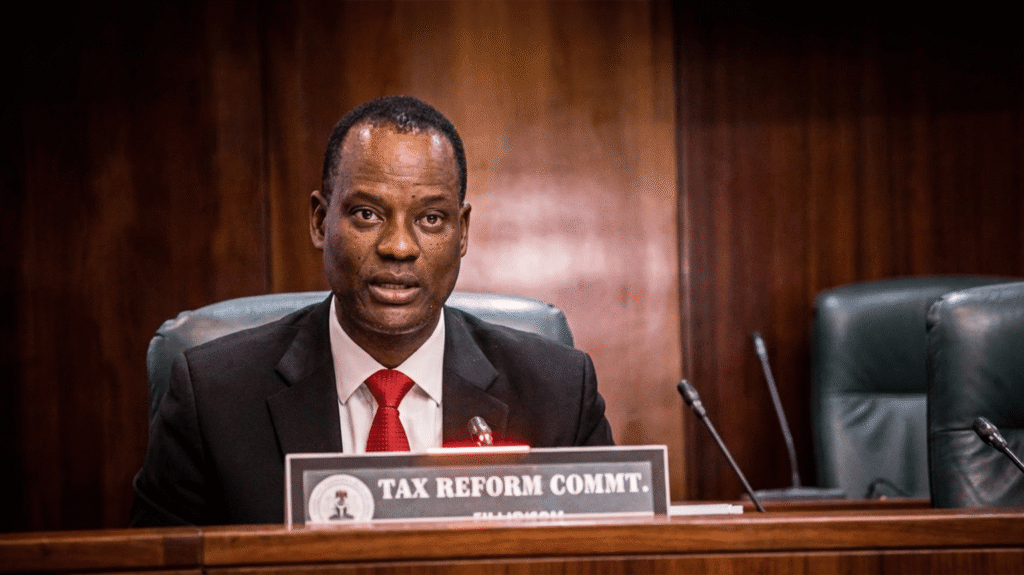
Meanwhile, Taiwo Oyedele, Chairman of the Presidential Committee on Fiscal Policy and Tax Reforms, revealed that President Tinubu has directed tax administrators to stop taxing poverty, capital and seed, and instead invest in the people to enable businesses to grow.
Oyedele made the disclosure in Abuja during a town hall meeting with artisans and traders organised by the Small and Medium Enterprises Development Agency of Nigeria (SMEDAN).
According to him, the President has urged all stakeholders to collaborate in supporting nano, micro, small and medium-sized enterprises (MSMEs), rather than stifling them with multiple and burdensome taxes.
“You cannot build a society where businesses are not allowed to breathe,” Oyedele said. “The real strength of any society lies in enabling its 35 million nano, micro, small and medium businesses to grow. That is the real Nigeria.”
He noted that most businesses in the country operate at the nano level and expressed optimism that, with the right support, many could grow into billion-naira enterprises annually.
Oyedele also acknowledged growing public anxiety over tax reforms, attributing it largely to misinformation. “There is a lot of negative misinformation around tax reform. Instead of excitement, people are afraid,” he said, urging greater public engagement and clarity.