Ex-South Korean First Lady Kim Keon Hee Sentenced to 20 Months for Corruption
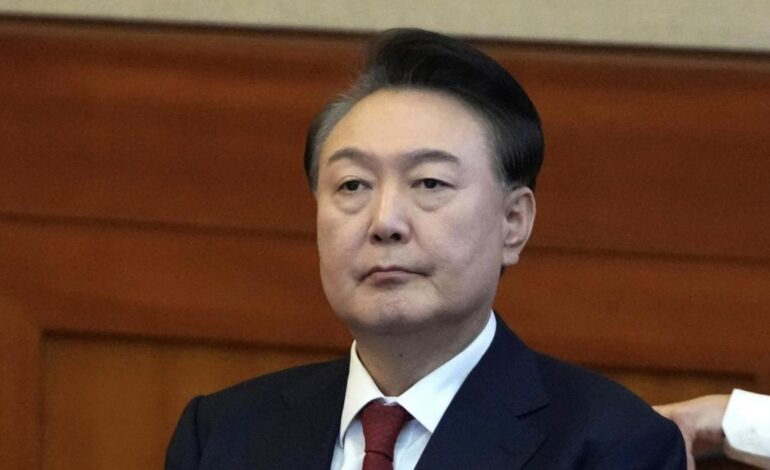
By Titilope Johnson
Kim Keon Hee, wife of South Korea’s impeached former President Yoon Suk Yeol, has been sentenced to 20 months in prison for corruption, while her husband faces trial on rebellion charges that could lead to life imprisonment or the death penalty.
Seoul Central District Court delivered the verdict on Wednesday, convicting Kim of accepting expensive gifts, including a diamond necklace, from the Unification Church in exchange for promises of business favours.
The ruling marks a further decline for the former first family, whose political careers unraveled following Yoon’s controversial martial law declaration in December 2024, which triggered mass protests, impeachment proceedings, and his eventual removal from office.
Kim and Yoon have been detained separately for several months. While Yoon faces charges related to martial law and alleged abuse of power, Kim was prosecuted on multiple corruption counts. Investigators confirmed she had no role in planning or enforcing martial law.
The court acquitted Kim of stock price manipulation and illegal political funding due to insufficient evidence but ruled her bribery offences merited imprisonment. “Being close to a president, the first lady wields influence and represents the country alongside him. The defendant exploited that position for personal gain,” the court stated.
The 20-month sentence is significantly lower than the 15-year term prosecutors sought, who had charged her with bribery, market manipulation, and illegal political financing. Kim’s lawyers welcomed the partial acquittals but said they may appeal, calling the prison term “relatively high.”
Kim has been in custody since August 2025 after her arrest, which was approved due to concerns she might tamper with evidence. Prior to her detention, she publicly apologized but maintained that she was insignificant and intended to contest the charges.
The verdict comes just weeks before Yoon’s trial is expected to conclude, with prosecutors reportedly seeking the death penalty for his role in the martial law decree. Analysts have described the case as one of the most significant political scandals in South Korea’s recent history.