Corruption, Not Religion or Ethnicity, Fuels Insecurity in Nigeria — EFCC
By Titilope Johnson
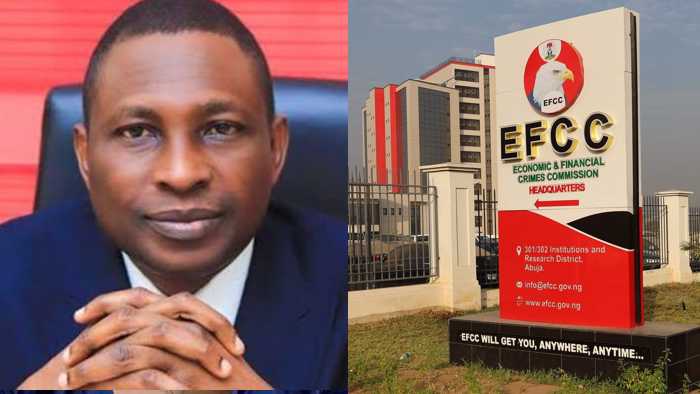
The Executive Chairman of the Economic and Financial Crimes Commission (EFCC), Mr Ola Olukoyede, has identified corruption as the principal driver of insecurity in Nigeria, stressing that religion and ethnicity often serve as distractions from the deeper, systemic problem.
Olukoyede made the assertion while presenting a paper titled “Corruption, National Security and Economic Prosperity” at the Annual Lecture Series of the Nigeria Air Force Officers Mess Honorary Members’ Forum in Lagos.
Speaking through the EFCC Director of Public Affairs, Commander CE Wilson Uwujaren, the EFCC boss said weak accountability in the management of public and private resources has entrenched corruption across the country.
While acknowledging that religious extremism, ethnic rivalries and agitations for self-determination are frequently cited as causes of insecurity, Olukoyede insisted that “the real elephant in the room is corruption.”
He explained that corruption directly fuels insecurity when funds meant for security operations are diverted or when resources intended for poverty reduction and social development are misappropriated by the political elite. He also criticised the abuse of security votes, describing them as opaque channels for siphoning public funds, and cited the prosecution of a former governor over the alleged diversion of more than ₦4 billion in security votes.
According to him, the EFCC contributes to the fight against terrorism and violent extremism through non-kinetic measures, including tracking illicit financial flows, monitoring designated non-financial institutions and Bureau De Change operators, and combating money laundering.
Olukoyede added that the Commission also monitors local and international non-governmental organisations operating in the North-East to prevent their use as fronts for subversive activities, while collaborating with sister anti-corruption agencies in West Africa under the Network of Anti-Corruption Institutions in West Africa (NACIWA).
He noted that EFCC’s asset recovery efforts have supported Nigeria’s economic recovery, with parts of recovered funds invested in social intervention programmes such as students’ loans and consumer credit schemes.
The EFCC chairman further disclosed that the Commission has helped stabilise the economy by tackling currency racketeering, naira mutilation and illegal foreign exchange trading, which have helped ease pressure on the naira.
He also revealed that upon assuming office, the EFCC adopted a policy of not shutting down businesses under investigation in order to preserve jobs and livelihoods during the current economic challenges.
In a statement issued on Monday by the Commission’s Head of Media and Publicity, Dele Oyewale, the Chairman of the NAFOM-HMF, Ikeja, Dr Goke T. Akinrogun, commended Olukoyede for the lecture, while the Chief Host, Air Commodore Ewejide Akintunde, praised the organisers for sustaining the annual forum.





