New Documentary Revisits Asaba Massacre, Confronts Nigeria’s Unresolved Past
A new documentary, Asaba Massacre: October 1967, is reopening one of the darkest chapters of Nigeria’s civil war, drawing renewed attention to a tragedy that remains little known to many Nigerians, especially younger generations.
Produced by Chief Chuck Nduka-Eze, the Isama Ajie of Asaba, and directed by historian and documentary filmmaker Nze Ed Emeka Keazor, the film chronicles the mass killing of unarmed civilians by Nigerian troops in Asaba in October 1967.
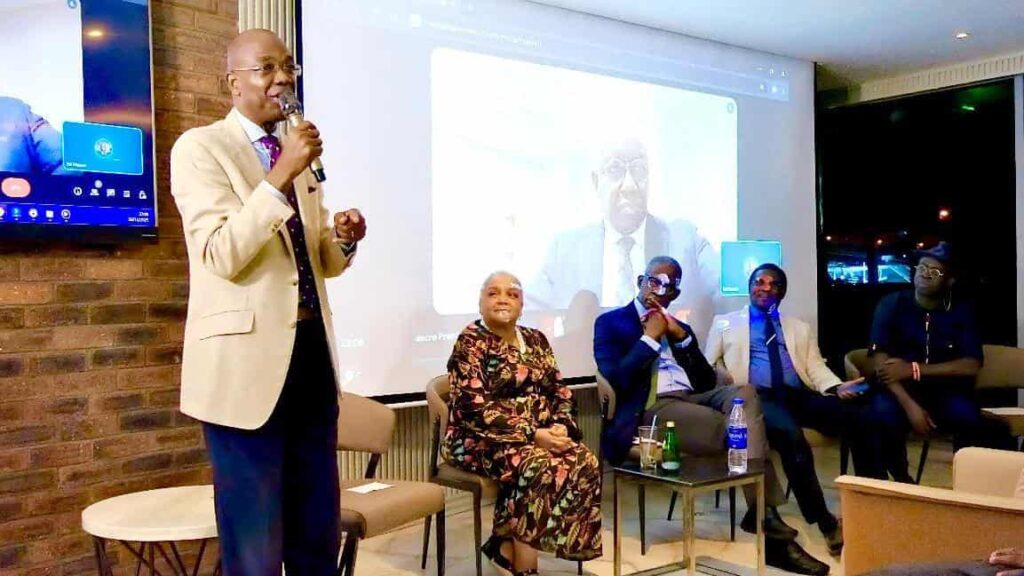
The documentary premiered internationally at the Africa Centre in London on October 26, before its Nigerian debut at the Jet Ski Club, Ikoyi, Lagos, on November 26, 2025.
For Nduka-Eze, the project is deeply personal. He said the motivation for the film stemmed from his own experience of loss during the massacre and a strong sense of communal responsibility. “I considered it a duty of sacred trust to my community,” he said, explaining that the documentary seeks to preserve and document events that profoundly shaped Asaba and its people.
The project began three years ago when Nduka-Eze commissioned Keazor to research, direct and produce the film. The process involved extensive historical research, survivor testimonies and careful editorial judgement to ensure factual accuracy without sensationalism. According to the producer, the documentary aims to give voice not only to his personal pain but also to the shared trauma of a community whose lives were permanently altered.
The Asaba massacre occurred in October 1967 when soldiers of the Second Division of the Nigerian Army entered the town during the civil war. Historical accounts referenced in the documentary state that troops, led at the time by Lt Col Murtala Muhammed with Lt Col Ibrahim Taiwo as his deputy, gathered unarmed civilians—mostly men and boys—at Ogbeosowa Square.
Believing they were being asked to demonstrate loyalty to the Federal Government, the victims marched while singing “One Nigeria,” only to be executed. More than 1,000 Asaba men were killed.
Nduka-Eze noted that Asaba was within federal territory at the time, making the killings particularly disturbing. Nigerian soldiers, he said, executed fellow Nigerians on Nigerian soil while the victims openly professed national unity. “They desecrated and violated the sacred essence of our national identity,” he said, adding that while the core facts have never been denied, they have remained insufficiently acknowledged and addressed.
The premieres themselves became moments of remembrance and reflection. At the London screening, His Royal Majesty, the Asagba of Asaba, Professor Epiphany Azinge, attended as guest of honour. The event was hosted by Nduka-Eze alongside the chairman of the Africa Centre, Professor Oba Nsugbe KC SAN, who also lost his grandfather in the massacre.
Members of the Asaba diaspora were present, including academics and researchers such as Professor Victor Izegbu and Professor Liz Bird, author of Asaba Massacre: Trauma, Memory and the Nigerian Civil War, as well as guests from the United States.
The Lagos premiere attracted a similarly distinguished audience, including Her Royal Majesty Agu Nwanyi Modupe Edozien, widow of the late Asagba Professor Chike Edozien; the Netherlands’ Consul-General, Michel Dellen; and the Director-General of the National Commission for Museums and Monuments, Gbile Holloway.
A panel discussion followed the screening, featuring legal practitioners and cultural figures such as Supo Shasore SAN, Aduke Gomez, Demola Akinrele SAN and Chijioke Okoli SAN. Panellists reflected on the massacre’s lasting social and psychological impact and the need for national resolution.
Revisiting the trauma, Nduka-Eze acknowledged, was emotionally difficult but necessary. While the process reopened painful memories, he said it also created space for reflection for both Asaba and Nigeria as a whole.
Editorially, he explained, the filmmakers faced challenging decisions in portraying violence and suffering. He said he instructed the director to ensure the work remained historically accurate, sensitively handled and unambiguous in presenting the facts, striking a balance between honesty and respect for victims.
On the issue of justice, Nduka-Eze said he does not believe adequate redress has been achieved. He noted that the Asaba community has repeatedly presented its demands to successive governments, most recently to President Bola Ahmed Tinubu, who granted an audience to a delegation led by the Asagba. The community, he said, hopes its appeals will finally receive due attention.
Looking ahead, Nduka-Eze stressed the importance of integrating events such as the Asaba massacre into Nigeria’s national memory and educational curriculum. “A nation that does not learn from its past is bound to repeat the same mistakes,” he said, adding that memorialisation and education remain vital to preventing such tragedies in the future.





