“None Was Spared”: Survivors Recount Horror of Gun and Machete Massacre in Nigeria’s Plateau State
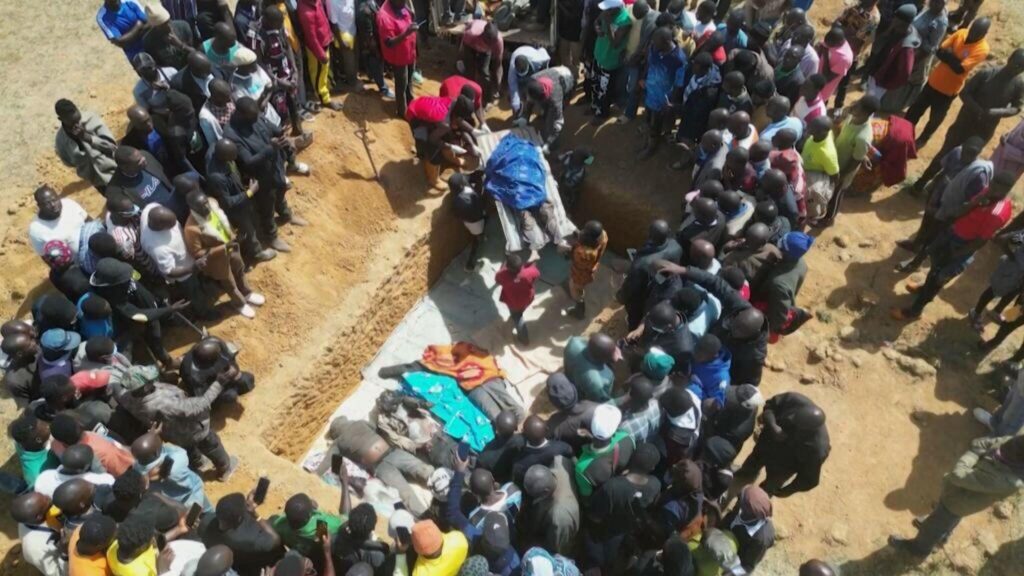
In a night of unrelenting horror, attackers armed with guns and machetes stormed through villages in Nigeria’s Plateau State, leaving a trail of devastation. Survivors say the violence was indiscriminate — men, women, and even a nine-month-old baby were among the over 100 people slaughtered in two deadly attacks within two weeks.
What was once a bitter struggle over land between farmers and herders has now escalated into something darker — a wave of mass killings that local officials describe as systematic and premeditated.
A Night of Blood in Kimakpa
On Sunday night, in Kimakpa village, just 25 kilometers from the state capital Jos, 25-year-old Peter John watched in horror as attackers burst into his family home around 10:00 p.m. He escaped by climbing onto the roof — but not before witnessing the murder of his sister and her daughter. His older brother and infant niece were also killed.
“There was no specific target. They were just shooting,” said John, speaking from a nearby hospital where he is receiving treatment. “They shot and killed my younger sister and her daughter right in front of me.”
The attackers, who witnesses say spoke the Fulani language, moved house to house, shooting residents and hacking others with machetes.
Ethnic Tensions and Unchecked Violence
Plateau State has long been a flashpoint for clashes between predominantly Christian farming communities and Muslim Fulani herders. But the scale and brutality of these recent attacks suggest something far more coordinated.
“This is not an isolated conflict between farmers and herders,” said Plateau State Governor Caleb Mutfwang. “What we are witnessing is a systematic and premeditated campaign,” he warned, suggesting that the attackers may have external backing.
In response, the governor has banned night-time cattle grazing and the transport of cattle after 7:00 p.m., while urging local vigilante groups to coordinate patrols with security forces.
But for residents like Peter John, such measures come too late.
“I called the vigilante group that night — but it was too late,” he said. His seven-year-old nephew now lies in the hospital with severe machete wounds to the neck and head.
“Don’t Come — It’s Too Dangerous”
Other survivors shared similar stories of helplessness. Diwe Gado Diwe, 41, was away from his village when the attack happened. His sister called, warning him not to return.
“She told me not to come,” he recounted from the hospital, moments after learning that his brother had died in intensive care from gunshot and machete wounds.
“I tried calling the vigilante group, but the line didn’t go through,” said Diwe, who works in neighboring Bauchi State.
He later learned that one of the first casualties was a local vigilante on patrol.
“They Came Shouting ‘Allahu Akbar’”
Survivors report that the attackers shouted “Allahu Akbar” (“God is Greater”) as they rampaged through Kimakpa, shooting villagers and setting homes on fire.
Jessica John, 45, sat beside her son, Saryie John, who awaits surgery to remove a bullet lodged in his chest. Her son had fled during the attack, only to return later with a friend to check on their family. The friend was shot dead. Her son barely survived.
“This was one of the worst experiences of my life,” she said quietly.
A Cry for Justice
Despite the scale of the massacre, no arrests have been reported. The motive remains officially unconfirmed, although survivors and local leaders believe the killings are part of a broader campaign of terror aimed at displacing communities.
Some politicians have even used the word “genocide” to describe the attacks — though critics warn that such rhetoric may distract from the more urgent issues of criminal impunity and the state’s failure to protect its people.
For now, the residents of Plateau remain in mourning, their grief deepened by a growing sense of abandonment.