Makinde Hints at Backing Successor From His Team for 2027 Guber Race
By Titilope Johnson
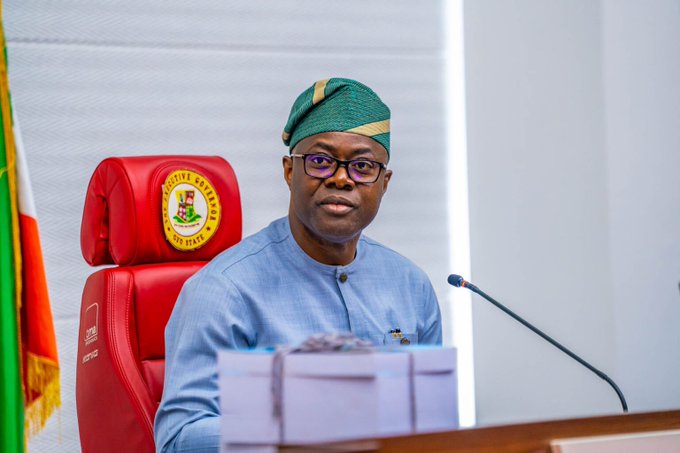
Governor Seyi Makinde of Oyo State has given the clearest indication yet that he may endorse a successor from within his current team ahead of the 2027 governorship election, saying the move would ensure continuity and deepen the state’s sustainable development roadmap.
The governor made this known on Thursday during the Stakeholders’ Consultative and Engagement Meeting on the 2026 Budget, held at Ogunlana Hall, International Conference Centre, University of Ibadan.
Makinde, whose second term ends in 2027, explained that while the final decision on the next governor rests with the people of Oyo State, he may recommend someone who understands and aligns with his administration’s developmental trajectory.
“If we put anybody forward in our team, what it means is that we have evaluated that individual. It wouldn’t be about the individual per se. If, within the team, we have a roadmap for continued development of Oyo State for 2027 and beyond, and we have people within that team who have already bought into it, that would be the best path forward,” Makinde said.
He stressed that Oyo residents are now politically aware and would base their choices on capacity and competence, not mere slogans or sentiments.
“The decision on who would be the next governor rests with the people of Oyo State. We will make our own submission to the people, because Oyo State has gone beyond stunt politics. Maybe it used to happen in the past. Now, Oyo State people will ask you questions,” he added.
Makinde’s remarks signal an emerging succession plan aimed at preserving his administration’s policy gains and institutional reforms beyond his tenure.
The comment is expected to spark political interest as analysts, party loyalists, and citizens begin to focus on key members of his cabinet and inner circle for potential successors.
Makinde, who was first elected in 2019 and re-elected in 2023, has been widely commended for infrastructural renewal, fiscal reforms, and people-centred governance in the state.