GenCos Threaten Nationwide Shutdown Over N4 Trillion Debt as Band A Customers Protest Poor Service
By Kingsley Jeremiah, Abuja
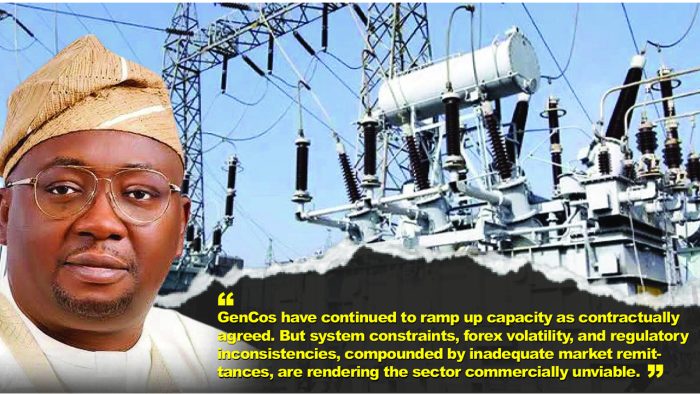
Nigeria’s power generation companies (GenCos) have warned of a looming nationwide blackout as they consider shutting down operations over unpaid invoices totaling more than N4 trillion. This development comes amid growing protests from Band A electricity customers who, one year after a significant tariff hike, are still grappling with poor power supply and unreliable service delivery.
The crisis, now threatening to cripple the national grid, has seen electricity generation drop below 5,000 megawatts, despite the Nigerian Electricity Regulatory Commission (NERC) recently sanctioning several distribution companies (DisCos) for service failures.
Manufacturers and residential users alike are increasingly ditching the national grid, citing unaffordable energy costs, erratic supply, and failed promises of improved service—particularly for Band A customers, who were assured of at least 20 hours of electricity daily following a steep 300% tariff increase.
GenCos Warn of Collapse
In a statement issued Monday, the Association of Power Generation Companies (APGC), led by its Chairman, Board of Trustees, Sani Bello, said the liquidity crisis in the power sector has reached an unsustainable level. GenCos are reportedly owed N2 trillion from 2024 operations and an additional N1.9 trillion in legacy debt, with no financial rescue plan in sight.
“Power generated by GenCos continues to be consumed in full without corresponding payment. We are owed over N4 trillion, and the situation is commercially unviable,” Bello stated.
He blamed the controversial ‘payment waterfall’ structure that prioritizes full payment to government agencies like NBET and the Market Operator, leaving GenCos with as little as 9–11% of their invoice value.
Despite regulatory reforms introduced in 2022, including partial contract activation, foreign exchange volatility, systemic constraints, and poor market remittances continue to erode the sector’s viability.
Businesses Desert the Grid
Former Chairperson of the Manufacturers Association of Nigeria (MAN), Rivers/Bayelsa Chapter, Emelia Ekama Akpan, warned of a mass exodus of manufacturers from the grid, citing the rising cost of electricity and unreliable supply. Many businesses are now turning to off-grid solutions such as solar to stay afloat.
“Most manufacturers are asking to be removed from the grid. The current electricity situation is a major threat to industrial growth,” Akpan said, calling for targeted subsidies and soft loans for industrial zones to sustain production.
She also highlighted the struggle consumers face to get metered, describing the process as expensive and inaccessible.
NERC Admits Shortcomings
A senior official at NERC, speaking anonymously, acknowledged that the 2023 tariff hike had failed to yield expected improvements in service delivery. Although payments to GenCos initially rose to 40% of market invoices, the gain is diminishing due to poor remittances from Band A customers.
“You may argue it didn’t solve the liquidity crisis, and it wasn’t meant to, but the system would have collapsed without it,” the official noted, urging deeper scrutiny into the federal government’s failure to release pledged subsidies.
Sector Experts Call for Overhaul
Prof. Segun Ajibola, former president of the Chartered Institute of Bankers, said the power sector’s issues run deeper than tariffs. He called for a complete overhaul to address structural inefficiencies, unmetered billing, and electricity theft.
Meanwhile, energy expert Emeka Ojoko criticized NERC for failing to enforce compliance among DisCos, especially regarding the 20-hour supply promise to Band A customers. He noted that the mounting debts and rising costs are pushing more consumers toward alternative energy sources, potentially destabilizing the already fragile sector.
Electricity analyst Lanre Elatuyi agreed, stating that while the removal of subsidies has helped federal finances and boosted DisCos’ revenues, it remains unfair to customers not receiving the agreed-upon supply levels. He emphasized the need for stronger regulatory oversight and better complaint resolution mechanisms.
Dr. Abubakar Ibrahim, founder of Empower Consult Africa, acknowledged some progress in supply to Band A feeders but flagged ongoing issues like faulty feeder mapping and inconsistent delivery. He warned that while some businesses benefit from improved grid power, the burden of rising bills is worsening the economic hardship for residential users.
As Nigeria marks one year since the tariff hike, the future of the country’s power sector hangs in the balance—caught between financial distress, policy failures, and mounting consumer frustration.





