Where Did ₦1 Trillion Go? Peter Obi Questions DBN’s MSME Funding Claims
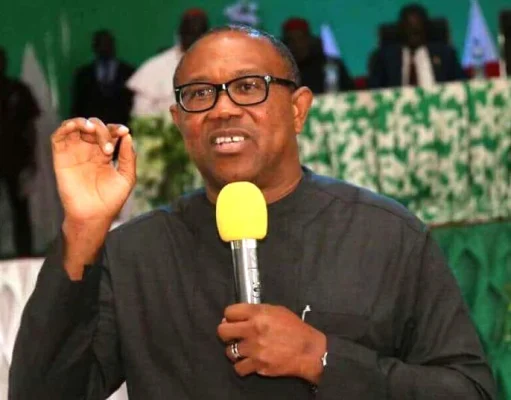
Former Governor of Anambra State, Peter Obi, has raised doubts over the Development Bank of Nigeria’s (DBN) claim that it has disbursed more than ₦1 trillion to micro, small, and medium enterprises (MSMEs) since 2015.
Earlier this year, DBN’s Managing Director, Tony Okpanachi, announced that over 69,000 MSMEs—particularly in disadvantaged states such as Borno, Yobe, Katsina, Zamfara, and Adamawa—had benefited from the bank’s interventions.
But in a statement shared on Wednesday, Obi argued that the claim does not match reality. According to him, most small business owners he has interacted with across the country neither know of the DBN’s existence nor have benefited from its loans.
“I recently read a report from the Development Bank of Nigeria (DBN) stating that it has disbursed over ₦1 trillion to MSMEs in Nigeria since 2015. By simple conversion, over the said period, this amounts to more than $1 billion,” Obi wrote.
“The reality is that most small businesses are not even aware of any such disbursement, and over 80% are unaware of the bank’s very existence. The level of knowledge about such an institution is directly proportional to its impact on the people it is meant to serve.”
Obi maintained that if the funds were truly deployed, their impact would be visible in job creation, enterprise growth, and poverty reduction.
“For instance, if $1 billion were disbursed in small loans averaging $1,000 each, it could have supported at least one million small businesses. The ripple effect of this would have been no less than three million new jobs, with measurable growth in enterprises and poverty reduction,” he explained.
Instead, Obi noted, Nigeria still faces record-high unemployment, widespread business closures, and worsening poverty levels.
“So the critical question is: if ₦1 trillion truly left the coffers of DBN to empower Nigerians, where did the money go? Who exactly were the beneficiaries? What tangible businesses were created? Where is the proof of jobs generated or poverty reduced?” he asked.
The former presidential candidate warned that without transparency, the bank’s claims risk being seen as “another round of grand deception, where scarce national resources are captured by a few elites and recycled under the guise of empowerment schemes.”
He concluded by calling for accountability, stressing that Nigerians “deserve evidence that such vast sums are being invested in their lives and future—not lost to corruption or buried in empty statistics.”