In Mega-City Lagos, 20 Million Rely on Just 100 Ambulances
By Titilope Johnson
When Michelin Hunsa’s mother collapsed at home in Lagos, it took two hours for an ambulance to arrive. She survived, but the experience left Hunsa “traumatised.”
Such delays are common in Nigeria’s bustling commercial hub of over 20 million people, where notorious traffic jams and a shortage of ambulances routinely put lives at risk.
The Lagos state government provides only 35 ambulances, while private companies operate about 80 to 90 more. That leaves the city with roughly one ambulance per 200,000 residents — far below international recommendations.
Ambulances often face mistrust on the roads, as frustrated drivers assume sirens are being misused. “Most people will not just want to leave the road,” said Queen Soetan, an ambulance driver. The result: intervention times are dangerously long.
In response, private companies are stepping in. Eight Medical, founded in 2021 by Dr. Ibukun Tunde-Oni, runs 34 ambulances, aiming to meet the medical “eight-minute response” standard. His motivation was personal: both his uncles died in medical emergencies where ambulance care fell short.
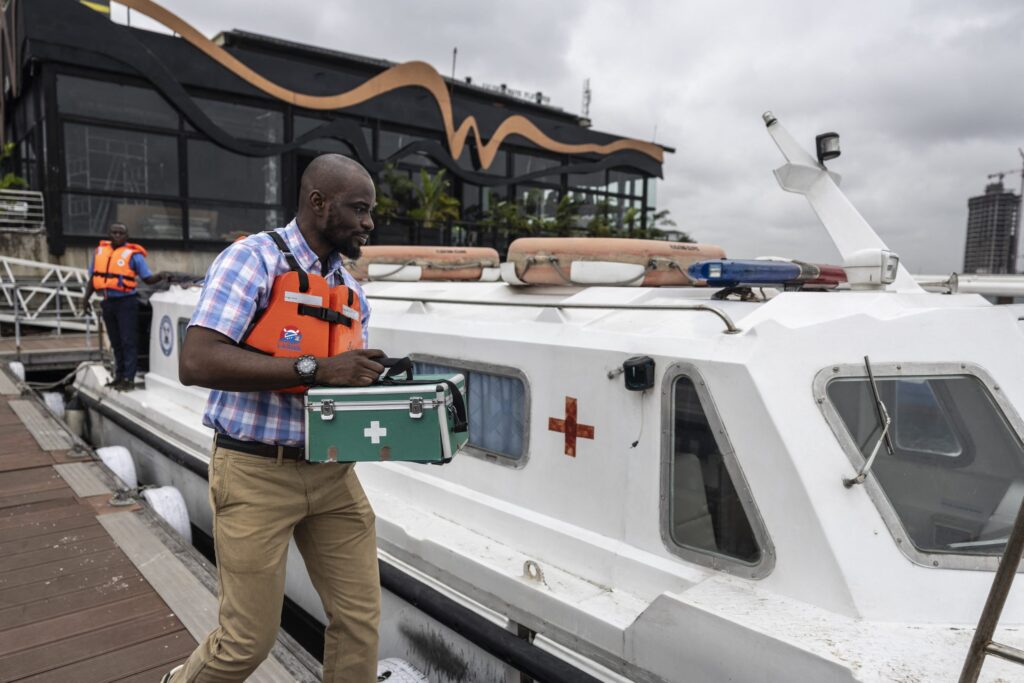
Authorities have also tried creative solutions. In 2022, Lagos introduced a floating clinic and boat ambulance to serve lagoon communities. But with limited funding, the project remains small-scale, and focus has shifted back to traditional ambulances, often via public-private partnerships.
Despite these efforts, the scale of the problem is immense. Lagos is projected to become the world’s most populated city by 2100, with 88 million residents, according to the University of Toronto’s Global Cities Institute. Yet healthcare infrastructure lags far behind this explosive growth.
Many who eventually reach hospitals encounter poor conditions, underpaid staff, and overcrowded wards. Ambulance services, meanwhile, remain hampered by bad roads, inadequate coordination with hospitals, and chronic underfunding.
For now, as Dr. Tunde-Oni bluntly puts it:
“One hundred ambulances for Lagos is not enough.”