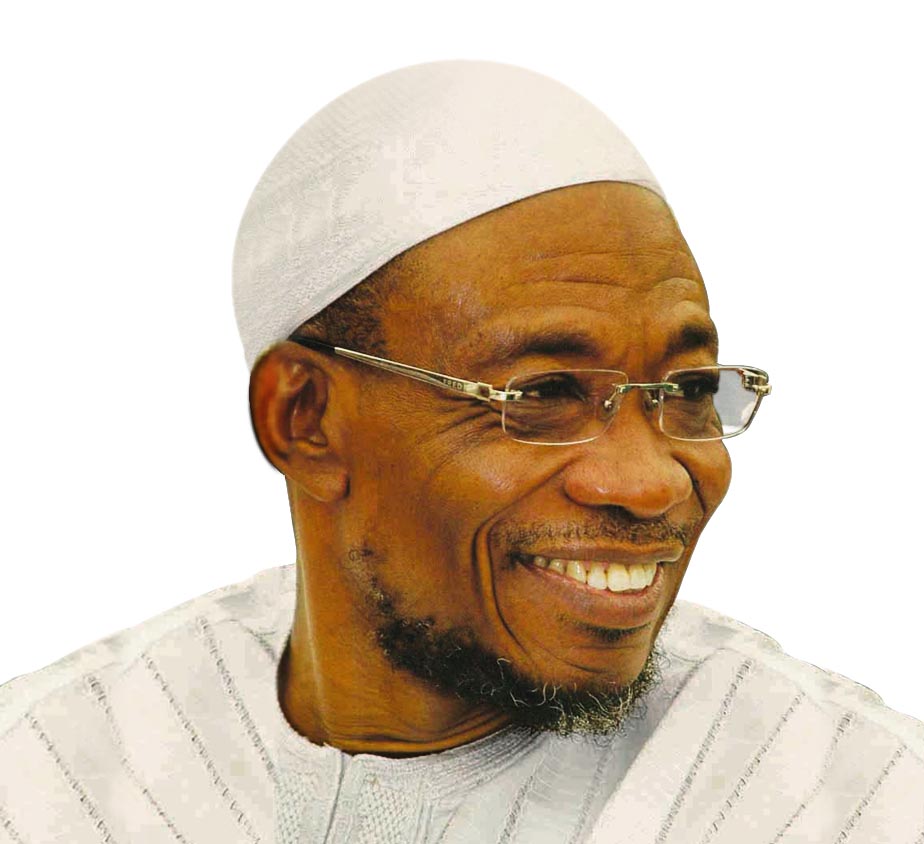
Rejoinder to the Open Letter on Rauf Aregbesola: A Tale of Distortion and Selective Amnesia
By Titilope Johnson
Dear Olushola Matthew,
Your recent letter to Ogbeni Rauf Aregbesola reads like a sanctimonious exercise in revisionism. While you claim to write “not in anger,” your tone betrays a biased narrative crafted more to appease political sentiment than to reflect the truth. Let’s address your assertions and restore historical accuracy to this discourse.
1. “Tinubu Made Aregbesola” — A Half Truth
Yes, Asiwaju Bola Tinubu supported Aregbesola, but their relationship was a partnership, not divine ordination. Aregbesola wasn’t merely a commissioner; he played a crucial role in Tinubu’s infrastructural and electoral successes in Lagos. He took political risks for Tinubu when others faltered.
His victory in Osun was no handout. He battled in court for over three years to reclaim a stolen mandate. Tinubu’s support helped, but the triumph was Aregbesola’s—built on courage, legal persistence, and public backing.
2. On Loyalty: Who Betrayed Whom?
If betrayal occurred, it wasn’t from Aregbesola. Tinubu urged him to decline a federal appointment under Buhari, only to secretly nominate Aregbesola’s subordinate for the Ministry of Interior—a position Aregbesola was highly qualified to fill.
Even then, Aregbesola remained publicly loyal. When Tinubu backed Gboyega Oyetola as successor in Osun, Aregbesola cautioned against the optics and consequences—not out of spite, but strategic foresight. Tinubu dismissed those warnings, and the fallout proved costly. Oyetola’s 2018 “victory” came through a controversial rerun, not a clear mandate. In 2022, the people had their say, and he lost.
3. The “Adversaries” Argument
You fault Aregbesola for associating with perceived APC opponents like Atiku, ignoring the fractures within APC itself—many stemming from Tinubu’s quest for unchallenged dominance. Aregbesola never publicly campaigned against Tinubu or insulted him. His critiques have been policy-driven and focused on internal party democracy. If some of his associates spoke out, attributing those views to him is dishonest.
Unlike others, Aregbesola never attacked the political house that raised him. He disagreed without destroying.
4. “Tinubu’s Hour of Triumph”: But at What Cost?
You frame Tinubu’s presidency as triumphant. Perhaps. But does loyalty require silence in the face of dysfunction? Tinubu, once a critic of autocracy, built his brand on defiance. Why should Aregbesola now be condemned for holding a mirror to power?
He stood with Tinubu not just as an ally but as a principled voice. If Tinubu sought only praise singers, then what he demanded wasn’t loyalty but worship.
5. Aregbesola’s Real Legacy
Aregbesola’s tenure in Osun speaks for itself. His administration introduced policies like O’YES, Opon Imo, and transformative road projects. He focused on people-centered governance, not elite appeasement. His legacy lies not in the spin of letter writers but in the lives he impacted.
Conclusion: Rejecting One-Sided History
Your letter attempts to simplify a nuanced relationship. Aregbesola’s loyalty endured until it was no longer respected. He was sidelined and smeared but chose dignity over drama.
Let history judge all the actors—not just the one to whom your loyalty is pledged. Loyalty, after all, is a two-way street. History remembers both sides.
The opinions expressed here are those of the author and do not represent the editorial position of DRUMMER NEWS.