MPC Retains Interest Rate at 27.5%, Seeks Stronger Fiscal Backing to Stabilise Naira
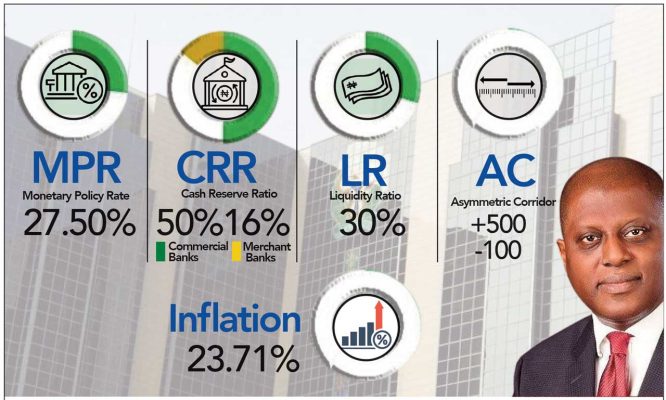
Key Highlights:
- Petrol imports drop amid domestic production boost
- MPC decision aimed at curbing capital outflows, FX pressure
- Naira rebounds to N1,598.72/$1
Amid increasing concerns over foreign exchange (FX) volatility and inflationary pressures, the Monetary Policy Committee (MPC) of the Central Bank of Nigeria (CBN), at its 300th meeting, retained the Monetary Policy Rate (MPR) at 27.5 per cent.
The decision, according to the MPC, is aimed at consolidating recent gains in price stability, ensuring inflation continues to trend downward, and maintaining investor confidence by preventing capital flight during a period marked by global uncertainties and derisking.
The CBN is relying on renewed fiscal collaboration to bolster FX inflows and support the naira, which showed signs of recovery yesterday after weeks of depreciation.
However, with global oil prices still subdued due to tariff-induced disruptions, opportunities to grow FX earnings in the short term remain constrained. Analysts believe sustained economic reforms and targeted fiscal policies could encourage more capital inflows and increase the FX supply base.
Rising Foreign Investor Confidence
Foreign investor participation in the stock market surged in March — the first such upswing in nearly a decade — signaling growing international confidence in Nigeria’s monetary reforms.
CBN Governor Yemi Cardoso, speaking at the end of the meeting, attributed persistent inflationary pressures to high electricity costs, FX demand, and structural issues. He urged the fiscal authorities to enhance efforts in boosting non-oil exports and improving FX earnings from gas and oil.
Cardoso noted the challenges posed by falling crude prices and increased global supply from non-OPEC countries, which could strain fiscal revenues and budget implementation.
Holding the key monetary parameters at current levels, Cardoso explained, allows the CBN time to evaluate evolving economic dynamics and craft suitable responses.
No Quick Return to N1,000/$1
While acknowledging Nigerians’ desire for a stronger naira, Cardoso was candid in his outlook, stating that the naira — like many other global currencies — is navigating turbulence. He stressed that Nigeria’s relatively mild depreciation compared to peers is a result of preemptive policies.
CBN’s net reserves are reportedly improving, driven by transparent processes and reforms that have restored industry confidence. Cardoso assured that the apex bank remains committed to maintaining sufficient external buffers well beyond the IMF’s six-month import cover benchmark.
Boost in Domestic Production and Diaspora Inflows
Cardoso highlighted a drop in fuel imports, crediting it to the operationalisation of Dangote and other domestic refineries. He noted that Nigeria’s competitiveness in gas exports has improved due to exchange rate advantages, presenting fresh regional market opportunities.
He also spotlighted the newly launched Non-Resident Bank Verification Number (NRBVN) policy, aimed at increasing remittances from the diaspora, with a $1 billion monthly inflow target. Cardoso described it as a “game-changer” that could unlock new investment opportunities for Nigerians abroad.
To support these developments, he urged banks to strengthen Know-Your-Customer (KYC) frameworks and work towards compliance with the Financial Action Task Force (FATF) requirements.
Market Sentiments and Expert Reactions
Investment banker Tolulope Alayande supported the MPC’s decision, arguing that holding the rate buys time to evaluate global developments, including ongoing U.S.–China trade tensions.
Dr. Muda Yusuf, CEO of the Centre for the Promotion of Private Enterprise (CPPE), welcomed the rate hold, noting that further tightening could have been counterproductive given the already restrictive credit conditions facing businesses.
He added that Nigeria’s macroeconomic fragility, especially its vulnerability to external shocks, requires cautious and steady policy actions.
Dr. Paul Uzum, Executive Director at Halo Nigeria Capital Management, echoed similar sentiments, warning that a rate cut could trigger capital flight and currency instability. However, he held out hope that if inflation continues to decline, rate cuts could be on the horizon in the coming quarters.
Professor Chude Nwude from the University of Nigeria emphasised the need for Nigeria to strengthen its production base. He argued that persistently high interest rates discourage real sector investments and called for a more supportive monetary policy environment.
Current Market Overview
In addition to retaining the MPR at 27.5%, the MPC maintained the asymmetric corridor at +500/-100 basis points, the cash reserve ratio (CRR) for commercial banks at 50%, CRR for merchant banks at 16%, and the liquidity ratio at 30%.
Meanwhile, the naira appreciated in the official market, closing at N1,598.72/$1 last week — a 0.46% week-on-week gain. The one-month forward rate stood at N1,636.05/$1, while the three-month forward contract closed at N1,700.59/$1. The parallel market rate hovered around N1,625/$1.
The Nigerian Autonomous Foreign Exchange Market (NAFEM) saw inflows rise to $914 million, up 47.66% from the previous week’s $619 million.







