Senate Sets Up 20-Member Panel for National Security Summit
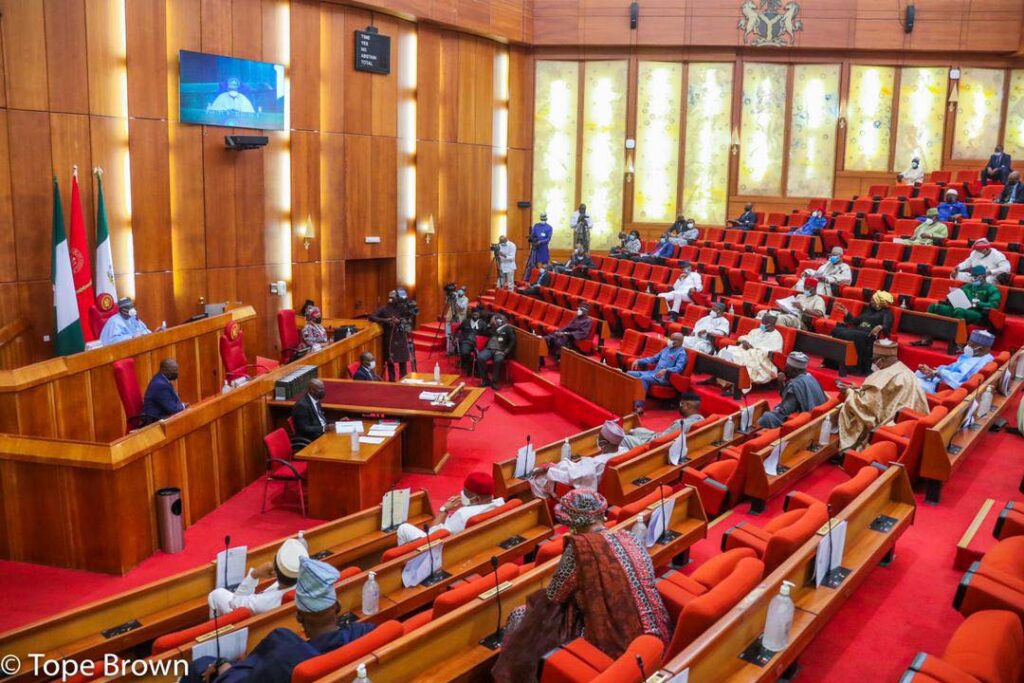
The Nigerian Senate has inaugurated a 20-member committee to organise a national summit focused on tackling the country’s worsening security challenges.
Senate President Godswill Akpabio, while announcing the committee during plenary, disclosed that the National Assembly is considering significant legislative actions to address crude oil theft—including classifying the crime as an act of terrorism.
The newly formed committee, chaired by Senate Leader Opeyemi Bamidele (APC, Ekiti Central) and vice-chaired by Yahaya Abdullahi (Kebbi North), is tasked with developing the summit framework, identifying priority security issues, and recommending actionable solutions. The committee is expected to present its report within two weeks.
Other members include Austin Akobundu (Abia), Shehu Buba (Bauchi), Ahmed Madori (Jigawa), Emmanuel Udende (Benue), Adams Oshiomhole (Edo), Shuaib Salisu (Ogun), Isah Jibrin (Kogi), and the Clerk of the Senate, Andrew Nwoba.
The resolution to convene the summit followed a motion on May 6 by Sen. Jimoh Ibrahim (APC, Ondo South), calling for a national dialogue to address insecurity. A central concern of the summit will be the alleged leakage of military intelligence to terrorists and bandits.
Although a similar initiative was undertaken by the 9th National Assembly in 2021, many of its recommendations were not implemented, with security conditions worsening in parts of the country.
Akpabio, represented by Deputy Senate President Barau Jibrin during a Senate ad hoc hearing on crude oil theft, reaffirmed the 10th Assembly’s commitment to ending economic losses from oil theft. He emphasized the need for stronger laws, greater oversight, and stiffer penalties—possibly including terrorism charges for offenders.
He called on oil companies to invest in modern surveillance technologies and stressed the role of host communities as frontline defenders of national oil assets.
In a related move, the Senate passed the Local Automotive Industry Patronage Bill, 2025 for second reading. The bill, sponsored by Sen. Ndubueze Patrick Chiwuba (Imo North), aims to mandate MDAs to purchase locally manufactured vehicles, bolstering indigenous production, creating jobs, and supporting the naira.
Chiwuba criticized Nigeria’s overdependence on imported vehicles, noting that only six of the 54 licensed local automakers remain operational, with many relocating to Ghana due to foreign exchange constraints and infrastructure gaps.
Meanwhile, lawmakers urged President Bola Tinubu to sign the Nigerian Forest Security Service (Establishment) Bill, 2025, designed to enhance security in rural and forested areas. This appeal followed the abduction of HRH Oba James Dada Ogunyanda and violent attacks in Benue State.
Senators noted that the forest security framework could support Tinubu’s proposed Forest Guard initiative and provide more structured protection for vulnerable regions.
Also, at a forum organized by the CLEEN Foundation and the Nigeria Police Force, Chairman of the Police Service Commission (PSC), Hashimu Argungu, flagged the overlapping mandates of Nigeria’s security agencies as a major obstacle to justice delivery. He warned that conflicting responsibilities undermine coordination and due process across the criminal justice system.
As the country grapples with escalating insecurity, the Senate’s push for legislative, institutional, and operational reforms underscores the urgency of comprehensive action.