Boko Haram Deploying Armed Drones in Borno, Military Warns Amid Worsening InsecurityYouth forum rejects National Assembly’s security summit; CSOs urge Zamfara governor to act decisively
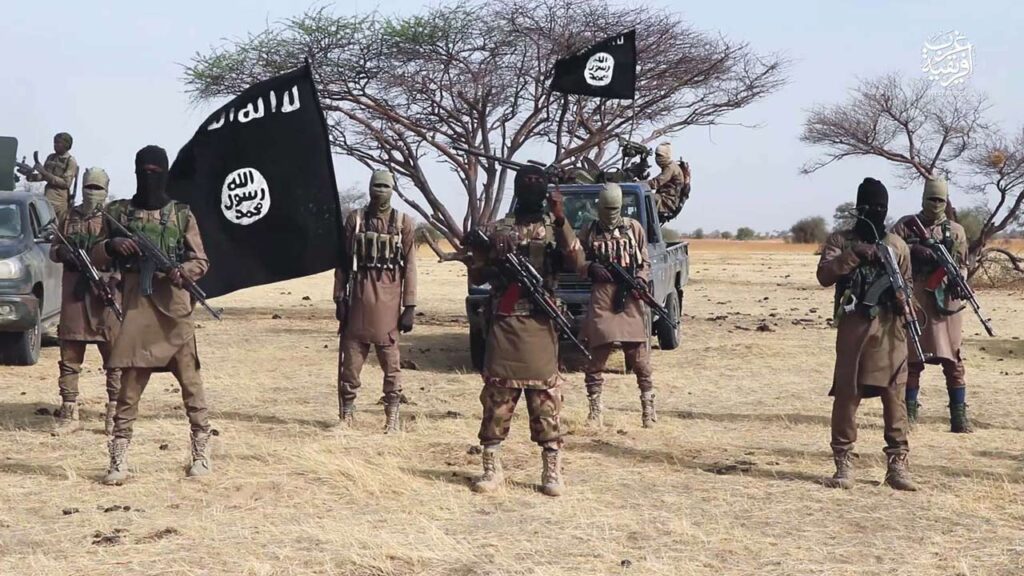
The Nigerian Army’s Operation Hadin Kai (OPHK) has raised the alarm over Boko Haram’s use of sophisticated, hard-to-detect armed drones in the North East, warning that the insurgents are evolving with dangerous new tactics.
Theatre Commander of OPHK, Maj.-Gen. Abdulsalam Abubakar, disclosed this during a media briefing in Maiduguri, Borno State, on Wednesday. He noted that the drones resemble models used in high-tech warfare by countries like Israel and Ukraine, making them difficult to detect with conventional radar systems.
“Two years ago, we were close to declaring the conflict over,” Abubakar said. “But the deterioration of security in the Sahel region has reignited terrorist activities. Weapons from ransacked neighbouring countries are finding their way into Nigeria, fuelling renewed violence.”
Despite recent military successes, he acknowledged that terrorist groups have adapted, exploiting regional instability and access to advanced technology.
Abubakar reported significant progress in restoring peace, citing the return of over 20,000 internally displaced persons (IDPs) to their ancestral homes, thanks to improved security efforts by troops.
Meanwhile, as insecurity escalates across the nation, the Nigeria Youth Forum (NYF) has rejected the planned national security summit by the Senate, passing a vote of no confidence in the National Assembly’s approach to the crisis.
NYF President, Toriah Filani, dismissed the summit as a “repetitive and ineffective measure,” adding that it would yield “another round of talk shows and hollow communiqués.”
He said: “The killings in Benue, Zamfara, Katsina, Borno, Plateau, and even the emergence of terror-linked groups in Kwara are coordinated assaults on national stability. We have no confidence in the National Assembly’s summit.”
Filani also criticized President Tinubu for failing to sack top military and police officials over ongoing atrocities, saying accountability would have sent a strong message across the security apparatus.
The Senate’s planned two-day summit was proposed by Senator Jimoh Ibrahim (APC, Ondo South) to address the spate of killings, kidnappings, and general insecurity in the country.
In a related development, the Coalition of Arewa Civil Society Organisations (CSO) called on Zamfara State Governor, Dauda Lawal, to act decisively against rising insecurity in the state.
Speaking at a press briefing at Arewa House in Kaduna, CSO convener Aminu Arabi urged Lawal to focus on building on the progress of previous administrations rather than engaging in political blame games.
“Since assuming office, Governor Lawal has become overly preoccupied with criticizing his predecessor instead of delivering on his campaign promises,” Arabi said. “As a coalition of over 65 civil society groups, we demand concrete action and accountability for the state’s resources.”







This is a concerning development in the fight against Boko Haram. The use of sophisticated drones by insurgents shows how quickly they are adapting to new technologies, which poses a significant challenge to our security forces. It’s alarming to think that weapons from neighboring countries are fueling this violence, especially when we were so close to declaring the conflict over. While the return of IDPs is a positive sign, it’s clear that the situation remains fragile. The criticism of the national security summit raises valid points—are we really addressing the root causes, or just repeating the same ineffective strategies? What concrete steps can be taken to ensure accountability and improve our response to these evolving threats? It’s time for decisive action, not just talk.