Nigeria’s Debt to IMF Rises by N2.5 Trillion in One Year Under Tinubu
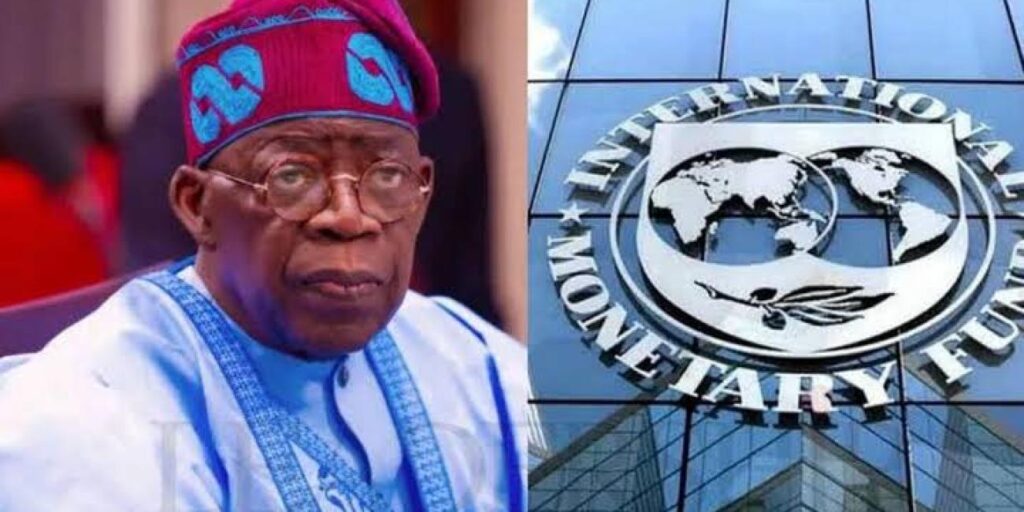
A review of the Central Bank of Nigeria’s (CBN) financial statement for the 2024 fiscal year has revealed that Nigeria’s liabilities to the International Monetary Fund (IMF) increased by N2.545 trillion within one year of President Bola Tinubu’s administration.
According to the report, Nigeria’s IMF-related liabilities stood at N2.524 trillion in 2023 but surged to N5.069 trillion by the end of 2024.
The CBN explained that, “IMF-related liabilities represent other payables owed by the Federal Government of Nigeria to the General Purpose Account of the IMF.” The sharp rise in liabilities was largely attributed to the depreciation of the naira, which led to an exchange loss of N2.544 trillion.
This surge adds to growing public concerns over Nigeria’s ballooning debt profile under President Tinubu, driven in part by the continued devaluation of the local currency, which magnifies the cost of foreign-denominated debt.
Despite pledges to reverse the trend, the administration has overseen significant increases in both external and domestic borrowing. In August 2023, while inaugurating the Presidential Committee on Tax Reforms, President Tinubu pledged to reduce Nigeria’s reliance on debt to fund public expenditure.
According to a statement published on the State House website, Tinubu said:
“President Bola Tinubu in Abuja expressed his resolute commitment to break the vicious cycle of overreliance on borrowing for public spending, and the resulting burden of debt servicing it places on the management of Nigeria’s limited government revenues.”
However, the data suggests otherwise. As of June 30, 2023 — the end of Tinubu’s first month in office — the Federal Government’s external debt stood at N29.8 trillion (excluding state and FCT obligations). By December 31, 2024, it had grown to N62.917 trillion — an increase of N33.1 trillion in just 18 months.
Similarly, domestic debt rose from N48.3 trillion in June 2023 to N70.4 trillion by the end of 2024 — an increase of N22.1 trillion. Combined, the total debt owed by the Federal Government alone rose by N55.2 trillion by December 2024.
Debt servicing costs have also spiked. In Q4 2024, the government spent N2.199 trillion servicing debt — exceeding the N2.067 trillion budgeted for the quarter and the N2.055 trillion spent in Q3 2024. It also marked an increase from the N1.876 trillion spent in Q4 2023.
The CBN noted that as of the end of September 2024, Nigeria’s total public debt stock stood at N142.32 trillion, equivalent to 51.29% of GDP — still below the 70% threshold for market-access countries.
The CBN attributed the rise in debt to exchange rate depreciation and new borrowings to finance the 2024 budget deficit. By year-end 2024, the Debt Management Office (DMO) confirmed that Nigeria’s total public debt stood at N144.6 trillion.





